
Learn the ABCDEs of mole checks and the warning signs that mean a mole needs attention. Full-body skin cancer screenings available in Jacksonville, FL.
Most moles are harmless. But in a state like Florida, where sun exposure is a year-round reality, knowing how to tell an ordinary mole from one that deserves a closer look is one of the most valuable skin health habits you can build. At Jacksonville Dermatology & Cosmetic Surgery, Dr. Beal performs full-body skin cancer screenings and mole evaluations to help catch concerning changes early, when treatment options are typically at their best.
Concerned about a mole, or overdue for a skin check? Request an appointment through our online form or call our office at (904) 420-7372.
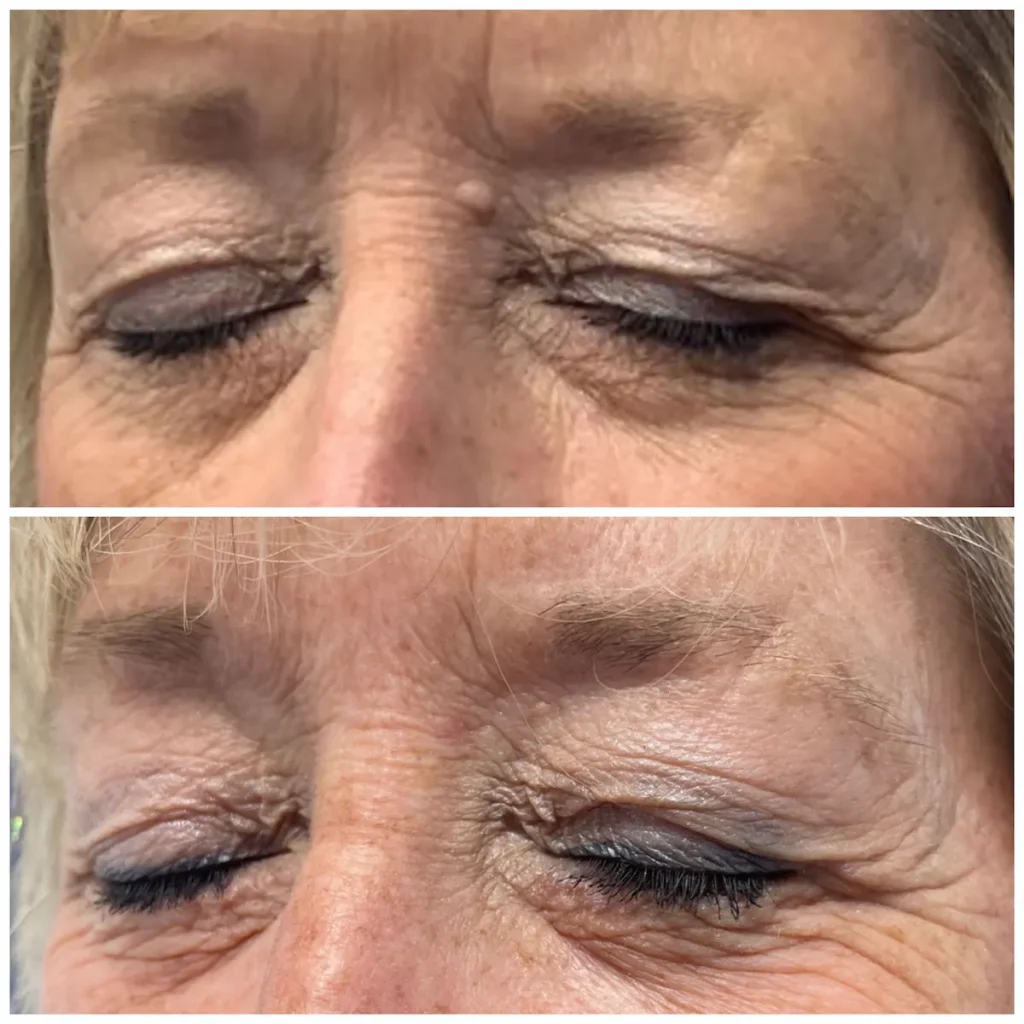
What Is a Mole, Exactly?
A mole (the medical term is nevus) is a cluster of pigment-producing cells in the skin. Most adults have between 10 and 40 of them, and the majority appear during childhood and young adulthood. Common moles are typically small, evenly colored, and stable over time.
The concern with moles is melanoma, a serious form of skin cancer that can develop within an existing mole or appear as a new spot on previously clear skin. Melanoma is often highly treatable when found early, which is exactly what the ABCDE method is designed to help with.
The ABCDE Method: How to Check Your Moles
Dermatologists use the ABCDE criteria as a memorable framework for spotting moles that may need professional evaluation:
- A is for Asymmetry. Draw an imaginary line through the middle of the mole. In a typical mole, the two halves roughly match. If one half looks noticeably different from the other, that asymmetry is worth noting.
- B is for Border. Common moles usually have smooth, well-defined edges. Borders that are ragged, notched, blurred, or that seem to fade into the surrounding skin can be a warning sign.
- C is for Color. A healthy mole is generally one uniform shade of brown or tan. Multiple colors within a single mole, including shades of brown, black, red, white, or blue, are a reason to have it examined.
- D is for Diameter. Moles larger than about 6 millimeters (roughly the size of a pencil eraser) deserve attention, though melanomas can certainly be smaller when first detected.
- E is for Evolving. This may be the most important letter of all. Any change in a mole’s size, shape, color, or elevation, or the appearance of new symptoms such as itching, bleeding, or crusting, should prompt a professional evaluation. A mole that looks different from the way it used to look, or different from your other moles, stands out for a reason.
The “Ugly Duckling” Rule
Alongside the ABCDEs, dermatologists often use a simpler observation: most of a person’s moles tend to resemble one another. A mole that looks clearly different from its neighbors, whether it is darker, larger, or simply odd by comparison, is sometimes called an ugly duckling and warrants a closer look, even if it does not check every ABCDE box.
How Often Should You Check?
A monthly self-exam is a reasonable habit for most adults. Use a well-lit room and a full-length mirror, and a hand mirror for hard-to-see areas like your back, scalp, and the backs of your legs. Do not forget often-missed spots: between the toes, the soles of the feet, under the nails, and behind the ears. For many Florida adults, an annual screening is a sensible baseline; patients with a personal or family history of skin cancer, fair skin, a history of sunburns, or many moles may benefit from more frequent visits.
When a Mole May Need Attention
You should schedule an evaluation promptly if a mole:
- Shows any of the ABCDE warning signs
- Is new and appeared in adulthood
- Itches, bleeds, crusts, or feels tender
- Looks clearly different from your other moles
If Dr. Beal identifies a spot of concern during your visit, he will explain what he sees and discuss appropriate next steps with you. For benign but bothersome moles, non-surgical removal options may be available depending on the mole’s type and location.
Protecting Your Skin in Florida
Prevention still matters. Daily broad-spectrum sunscreen, protective clothing, and avoiding the peak midday sun all reduce cumulative UV damage, a major driver of skin cancer risk in our sunny climate.
Schedule Your Skin Check in Jacksonville
Early detection is the single biggest advantage you can give yourself. If it has been more than a year since your last full-body skin exam, or if a mole has been on your mind, request an appointment using our online form or call (904) 420-7372.