
Home / Laser Treatments / Photodynamic Therapy
Photodynamic Therapy Jacksonville
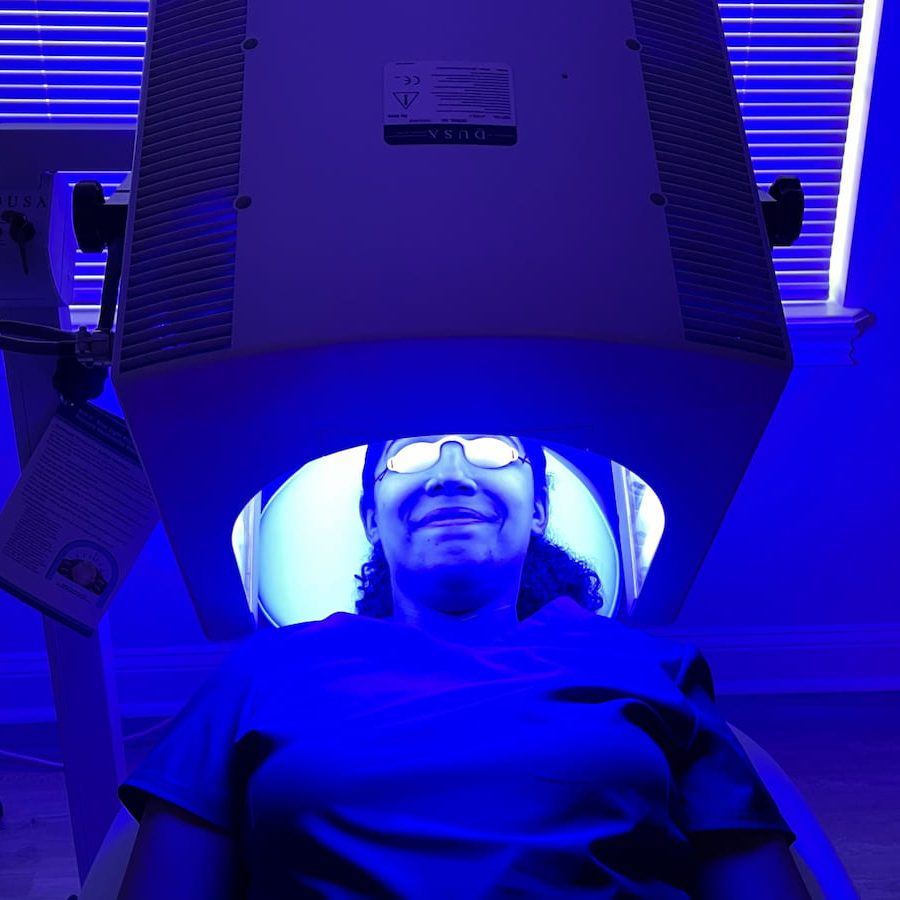
Photodynamic therapy (PDT) is a non-invasive blue light treatment for acne and precancerous sun damage. At Jacksonville Dermatology & Cosmetic Surgery, blue light therapy and PDT are one offering, performed by our experienced providers under the medical direction of Dr. Brandon T. Beal, a double board-certified, fellowship-trained dermatologist.
Double board-certified
Dr. Beal holds board certification in dermatology and Mohs micrographic surgery.
Fellowship-trained
Advanced training under Drs. Zitelli and Brodland.
Physician-owned
Independently owned small business, never a corporate chain.
Southpoint, Jacksonville
Off I-95 at Southpoint, minutes from most of Jacksonville and the beaches.
What Is Photodynamic Therapy?
Blue light therapy uses high-intensity blue light to treat the skin without needles, incisions, or surgery. Used on its own, the light targets the bacteria involved in many acne breakouts and can help calm inflammation and oil production. When it’s paired with a light-activated medication, the treatment is called photodynamic therapy (PDT), which allows the same light to treat precancerous sun damage such as actinic keratosis. At our Jacksonville office, blue light therapy and PDT are the same offering.
PDT is one of several light and laser options we offer. For brown spots, redness, or visible vessels, M22 IPL is often the better tool, and for texture concerns like fine lines and acne scars, see the ResurFx fractional laser.
How Photodynamic Therapy Works
When PDT is used for precancerous sun damage, treatment involves three key steps:
- Photosensitizing agent. A light-activated medication, usually aminolevulinic acid (ALA), is applied to the skin, where it selectively accumulates in damaged or abnormal cells.
- Incubation. The medication is left on the skin, typically from 30 minutes to a few hours, so the target cells can absorb it.
- Blue light exposure. The skin is exposed to blue light for about 15 to 30 minutes, activating the medication in the damaged cells while leaving healthy tissue intact.
For acne, blue light is often used without the photosensitizing agent. The light penetrates the oil glands and targets acne-causing bacteria directly, which can help reduce breakouts and inflammation.

What Photodynamic Therapy Can Treat
Acne
- Targets acne-causing bacteria in the oil glands
- Can help calm inflammation and reduce excess oil production
- May reduce the need for oral antibiotics in appropriate candidates
Precancerous sun damage (actinic keratosis)
- Treats rough, scaly patches caused by long-term sun exposure
- Treating these lesions matters because actinic keratosis can progress toward squamous cell carcinoma if left alone
- Can improve the overall look and feel of sun-damaged skin
In Jacksonville’s year-round sun, actinic keratosis is one of the most common findings at a skin exam. If you haven’t had one recently, a full-body skin cancer screening is the right place to start; if breakouts are the concern, see our acne treatment page for the full range of options.
Your PDT Visit
1
Before
Your provider evaluates your skin and confirms PDT is an appropriate option. The skin is cleansed, and for sun-damage treatment the photosensitizing agent is applied and left to incubate.
2
During
The treatment area is exposed to blue light for about 15 to 30 minutes. Most patients feel warmth or mild tingling, and the session requires no needles or incisions.
3
After
Mild redness or peeling is common. Sunscreen goes on before you leave, and after PDT you’ll need to avoid direct sunlight for at least 48 hours, since treated skin is temporarily more sensitive to UV. In Florida, we plan treatment timing around that with you.
Who Is a Good Candidate?
PDT may be a good fit if you have mild to moderate acne that hasn’t responded well to topical treatments, want an alternative to oral antibiotics, or have sun-damaged skin with precancerous lesions. It’s also an option for patients who prefer a non-invasive treatment with minimal downtime.
PDT is not recommended for patients with severe photosensitivity or conditions that make them highly reactive to light, those taking medications that increase sun sensitivity, or anyone with an active skin infection or open wound in the treatment area. Severe cystic acne usually calls for a different plan, which your provider can walk you through on the acne treatment page‘s full range of options.
Results vary. A consultation is required to determine whether photodynamic therapy is appropriate for you, and treatment plans are individualized.
How Many Sessions Are Needed?
It depends on what’s being treated. Acne plans often involve a series of four to six sessions spaced one to two weeks apart. Actinic keratosis is often treated in one to two sessions with a follow-up evaluation. Some patients choose periodic maintenance treatments afterward. Your provider will recommend a plan at your consultation, and results differ from person to person.
Schedule a PDT Consultation in Jacksonville
If you’re weighing blue light therapy for acne or have sun-damaged skin that needs attention, a consultation is the next step. We welcome patients from across the Jacksonville area, including Mandarin and St. Johns, at our office at 6817 Southpoint Pkwy, Suite 101. Send a request through our contact page, or call (904) 420-7372 to speak with our team. You can also review our pricing page.
Common questions
Photodynamic Therapy FAQs.
Are blue light therapy and photodynamic therapy the same thing?
At our office, yes, they’re one offering. Blue light on its own is typically used for acne. When a light-activated medication is applied first, the treatment is photodynamic therapy, which is how we treat precancerous sun damage such as actinic keratosis.
Does PDT hurt?
Most patients feel warmth or mild tingling during the light exposure, and treated skin can feel like a mild sunburn afterward. Sessions involve no needles or incisions, and any redness or peeling generally settles within days.
Is there downtime?
Downtime is minimal for most patients, with mild redness or peeling being the most common effects. The important rule after PDT is strict sun avoidance for at least 48 hours, since the skin is temporarily much more sensitive to UV, something we plan around carefully in Jacksonville.
How many sessions will I need?
Acne plans often involve four to six sessions spaced one to two weeks apart, while actinic keratosis is often treated in one to two sessions with follow-up. Your provider sets the plan with you at your consultation, and results vary by individual.
How much does photodynamic therapy cost in Jacksonville?
Cost depends on what’s being treated and the number of sessions in your plan. When PDT treats a medical condition such as actinic keratosis, insurance may apply; cosmetic acne treatment plans are typically paid directly. We review this at your consultation, and current information is on our pricing page.
Clearer skin, powered by light.
Blue light photodynamic therapy for acne and precancerous sun damage. Physician-owned and independent, in Jacksonville.