
Home / Medical Dermatology / Psoriasis
Psoriasis Treatment in Jacksonville
Itchy plaques, scalp flaking, cracked or painful skin: psoriasis has a way of inserting itself into daily life. It’s a chronic condition, but a manageable one, and the difference between flaring and forgetting about it usually comes down to the right plan. At Jacksonville Dermatology & Cosmetic Surgery, psoriasis is diagnosed and treated by our experienced providers under the medical direction of Dr. Brandon T. Beal, a double board-certified, fellowship-trained dermatologist.
Double board-certified
Dr. Beal holds board certification in dermatology and Mohs micrographic surgery.
Fellowship-trained
Advanced training under Drs. Zitelli and Brodland.
Physician-owned
Independently owned small business, never a corporate chain.
Southpoint, Jacksonville
Off I-95 at Southpoint, minutes from most of Jacksonville and the beaches.
What Is Psoriasis?
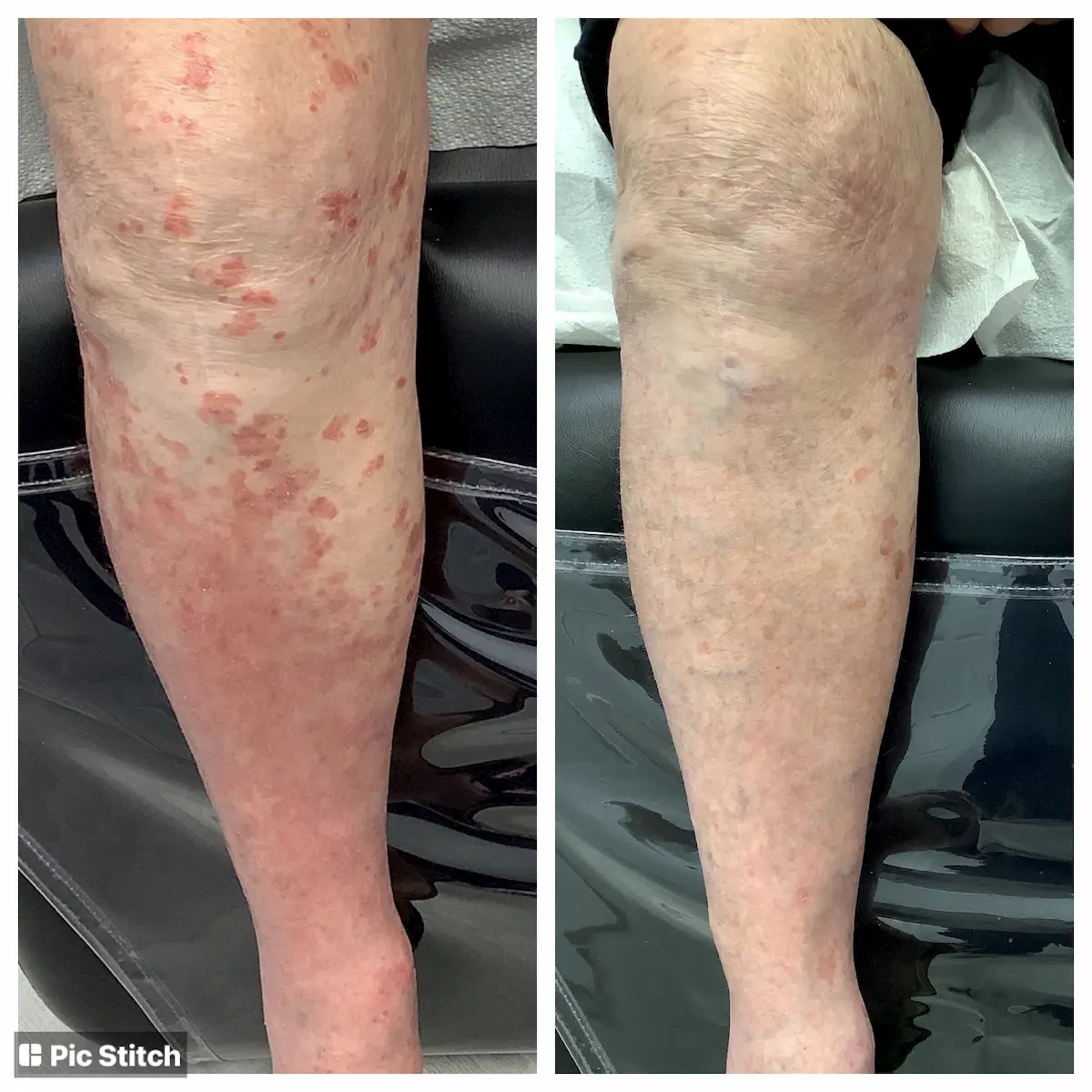
Psoriasis is an autoimmune condition in which the immune system mistakenly attacks healthy skin, pushing skin cells to multiply far faster than normal. Instead of shedding on schedule, cells pile up into thick, red, scaly patches called plaques, most often on the elbows, knees, scalp, and lower back, though they can appear anywhere, including the nails.
Psoriasis is not contagious. It often runs in families, and flares are commonly set off by identifiable triggers: chronic stress, infections like strep, skin injury (cuts, sunburn, even tattoos), smoking, heavy alcohol use, and certain medications such as beta-blockers or lithium. It can also look a lot like other conditions, particularly eczema, which is why the diagnosis deserves a dermatology exam rather than a guess.
How Is Psoriasis Diagnosed?
Diagnosis starts with a comprehensive skin exam and a review of your medical history: where the plaques appear, how long they’ve been there, what sets them off, and what’s been tried. In some cases, your provider may recommend a small skin sample, examined by a pathologist, to confirm psoriasis and rule out look-alikes such as eczema or fungal infections.
One thing worth mentioning at your visit: joint pain, stiffness, or swelling. Psoriasis can involve the joints (psoriatic arthritis), and catching that early matters, so your provider will want to know about anything beyond your skin.
Psoriasis Treatment Options
There’s no cure for psoriasis, and we won’t pretend otherwise. What good treatment delivers is control: clearer skin, fewer flares, and a plan that fits your life. Treatment is matched to your severity, your history, and how your skin responds.
Topical treatments
The starting point for mild to moderate psoriasis: prescription steroid creams, vitamin D analogs like calcipotriene, salicylic acid for thick scale, and calcineurin inhibitors for sensitive areas such as the face. The right combination, applied consistently, does more than most people expect.
Systemic medications
For moderate to severe or stubborn psoriasis, your provider may discuss oral or injectable options, from traditional systemic medications to newer prescription therapies. These are physician-directed and monitored, with the goal of the lowest effective treatment that keeps your skin clear.
Light-based treatment
For some patients, light-based treatment (narrowband UVB phototherapy) may be part of the plan to slow skin cell turnover and calm inflammation. Your provider will discuss whether it fits your case.
Lifestyle support
Daily fragrance-free moisturizing, gentle cleansers instead of harsh soaps and hot water, stress management, not smoking, and tracking your flares to learn your personal triggers. And a Florida note: moderate sun exposure improves psoriasis for many people, but sunburn is a classic flare trigger and a skin cancer risk, so the sun is a tool to use carefully here, not freely. If it’s been a while since your last skin check, a full-body skin cancer screening pairs naturally with psoriasis care.
Your Psoriasis Care
1
Diagnosis
A full skin exam, your history and triggers, and confirmation it’s psoriasis and not a look-alike, with a skin sample if needed.
2
Your plan
A written, individualized plan matched to your severity, from topicals to systemic options, plus the skincare routine that supports it.
3
Control
Follow-ups tune the plan as your skin responds: stepping treatment up when flares demand it, and down when your skin is clear. Sticking with the plan, even when symptoms improve, is what keeps them improved.
Schedule a Psoriasis Consultation in Jacksonville
If plaques keep spreading, over-the-counter creams aren’t holding the line, or you’ve never had a real diagnosis, it’s time. We welcome patients from across the Jacksonville area, including Mandarin and Fruit Cove, at our office at 6817 Southpoint Pkwy, Suite 101. Send a request through our contact page, or call (904) 420-7372 to speak with our team. You can also review our pricing page.
Common questions
Psoriasis FAQs.
Is psoriasis contagious?
No. Psoriasis is an autoimmune condition, not an infection, and it cannot be spread by touch, shared towels, or anything else. It does tend to run in families, which is genetics, not contagion.
Can psoriasis be cured?
There’s no cure for psoriasis, and anyone promising one isn’t being straight with you. What treatment can realistically deliver is long-term control: clearer skin, fewer and milder flares, and stretches where you barely think about it. Results vary by individual, and your provider will set honest expectations for your case.
Does the Florida sun help psoriasis?
Often, yes; moderate sun exposure improves psoriasis for many people, and Jacksonville has no shortage of it. But sunburn is a classic flare trigger and raises skin cancer risk, so the sun is a treatment to dose, not to binge. Your provider can help you find the line, and regular skin checks matter more, not less, if you’re using sunlight therapeutically.
How do I know it’s psoriasis and not eczema?
They can look alike, and the distinction changes the treatment. Psoriasis tends toward thick, well-defined, silvery-scaled plaques on the elbows, knees, and scalp; eczema tends toward itchier, less defined patches in the skin folds. A dermatology exam settles it, sometimes with a small skin sample, and that diagnosis is the foundation everything else is built on.
Does insurance cover psoriasis treatment?
Psoriasis is a medical condition, and many insurance plans cover evaluation and treatment; the specifics, especially for newer prescription therapies, depend on your plan. Our team can help you understand what to expect, and current information is on our pricing page.
Control you can live with.
Medical psoriasis care built for the long run, from diagnosis to clear-skin maintenance. Physician-owned and independent, in Jacksonville.