
Home / Cosmetic Dermatology / Hyperpigmentation
Hyperpigmentation Treatment in Jacksonville
Dark spots, patches, and uneven tone are among the most common concerns that bring people to a dermatology office, and in Florida’s sun, they rarely improve on their own. The good news: hyperpigmentation is one of the most treatable cosmetic concerns there is, once you know which kind you have. At Jacksonville Dermatology & Cosmetic Surgery, pigment concerns are diagnosed and treated across all skin tones by our experienced providers under the medical direction of Dr. Brandon T. Beal, a double board-certified, fellowship-trained dermatologist.
Double board-certified
Dr. Beal holds board certification in dermatology and Mohs micrographic surgery.
Fellowship-trained
Advanced training under Drs. Zitelli and Brodland.
Physician-owned
Independently owned small business, never a corporate chain.
Southpoint, Jacksonville
Off I-95 at Southpoint, minutes from most of Jacksonville and the beaches.
What Is Hyperpigmentation?
Hyperpigmentation is darkening of the skin caused by an overproduction of melanin, the pigment that gives skin its color. It can appear anywhere on the body and affects every skin tone, though how it looks and how it’s best treated varies from person to person. The most common drivers are sun exposure, hormones, and skin injury or inflammation; certain medications and, rarely, medical conditions can contribute as well, which is one more reason the first step is a proper diagnosis rather than a product.
Common Types of Hyperpigmentation
Melasma
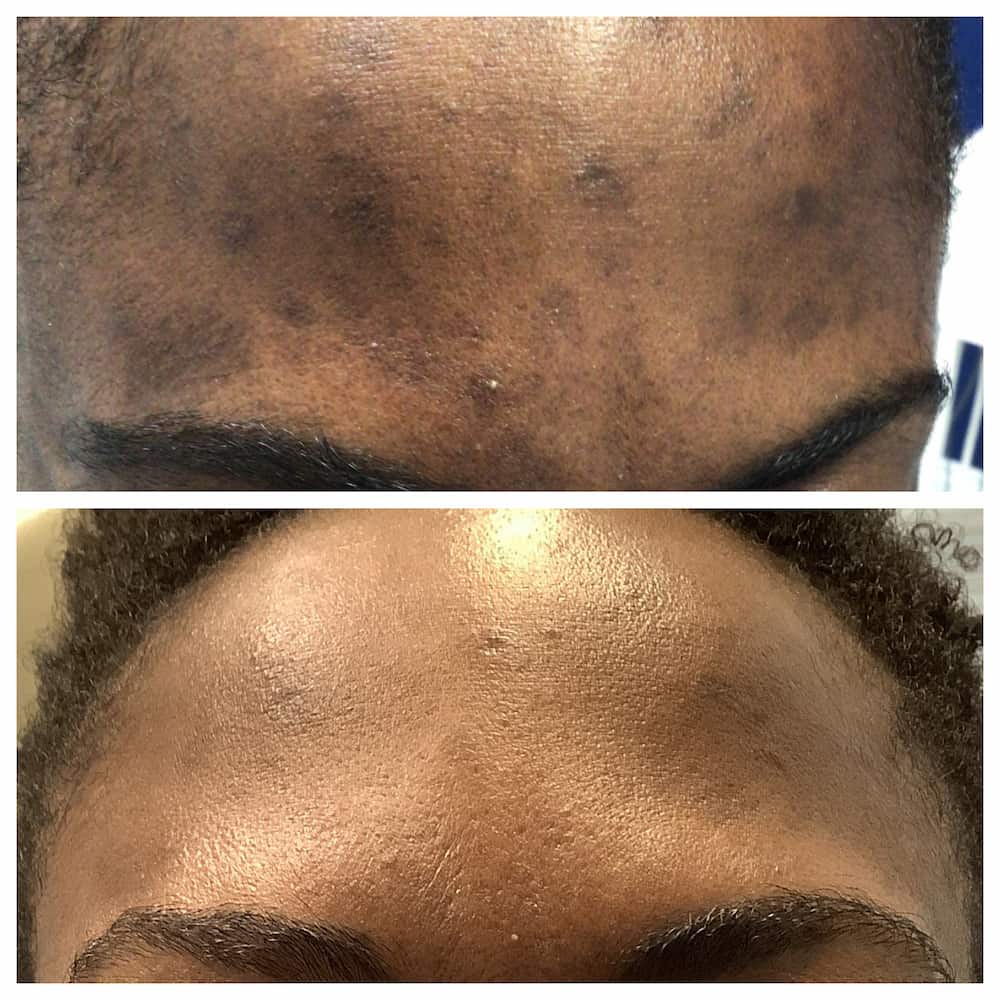
Often called the “mask of pregnancy,” melasma is driven by hormones, commonly during pregnancy or with hormonal contraceptives, and appears as symmetrical, blotchy patches on the forehead, cheeks, and upper lip. It behaves differently from other pigment and is treated differently too.
Post-inflammatory hyperpigmentation (PIH)
The dark marks left behind after acne, eczema, or an injury heals. PIH is more common in deeper skin tones, and it’s the reason “don’t pick” is medical advice, not nagging. (If your acne left texture changes rather than flat marks, that’s scarring: see acne scar treatment.)
Sun spots
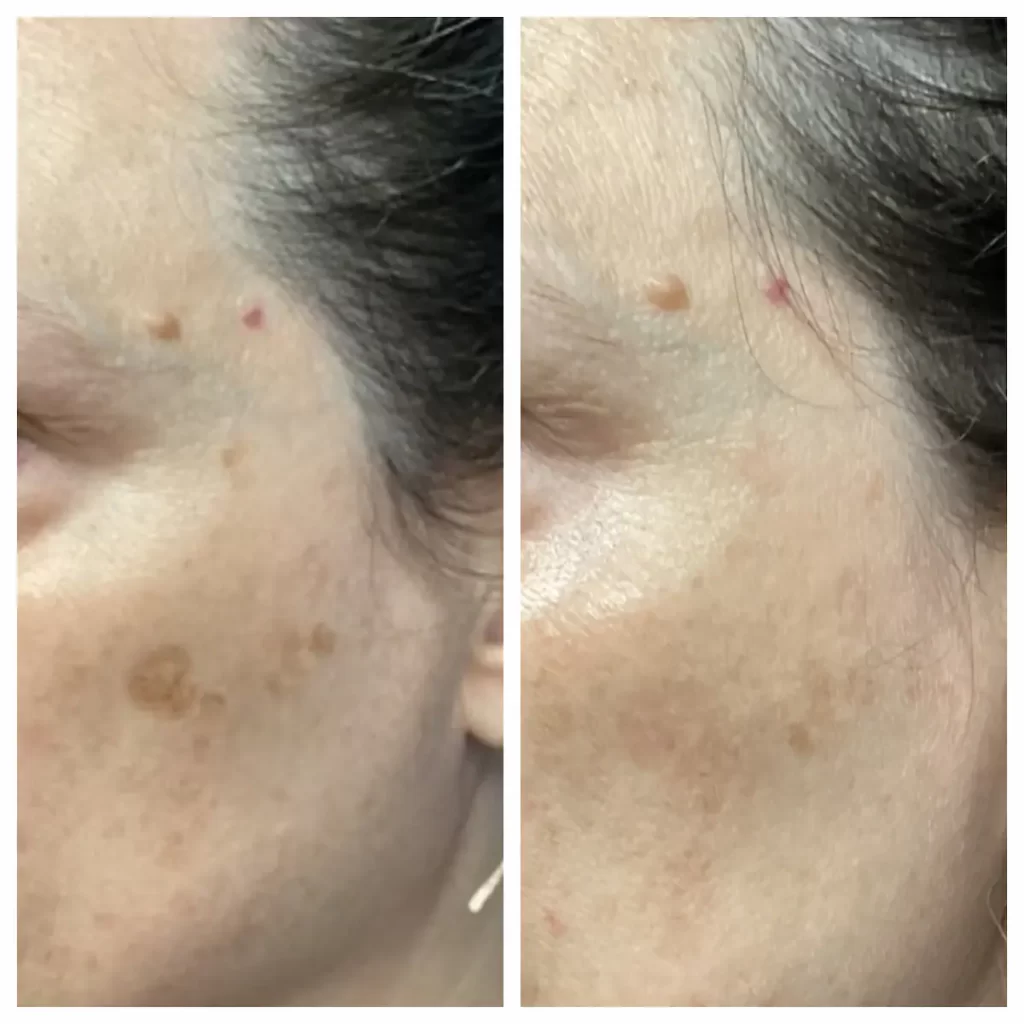
Also called age spots or solar lentigines: flat brown spots on the face, chest, shoulders, and hands, earned one Florida afternoon at a time. One caution before treating any dark spot cosmetically: new or changing spots deserve a medical look first, and a full-body skin cancer screening if it’s been a while.
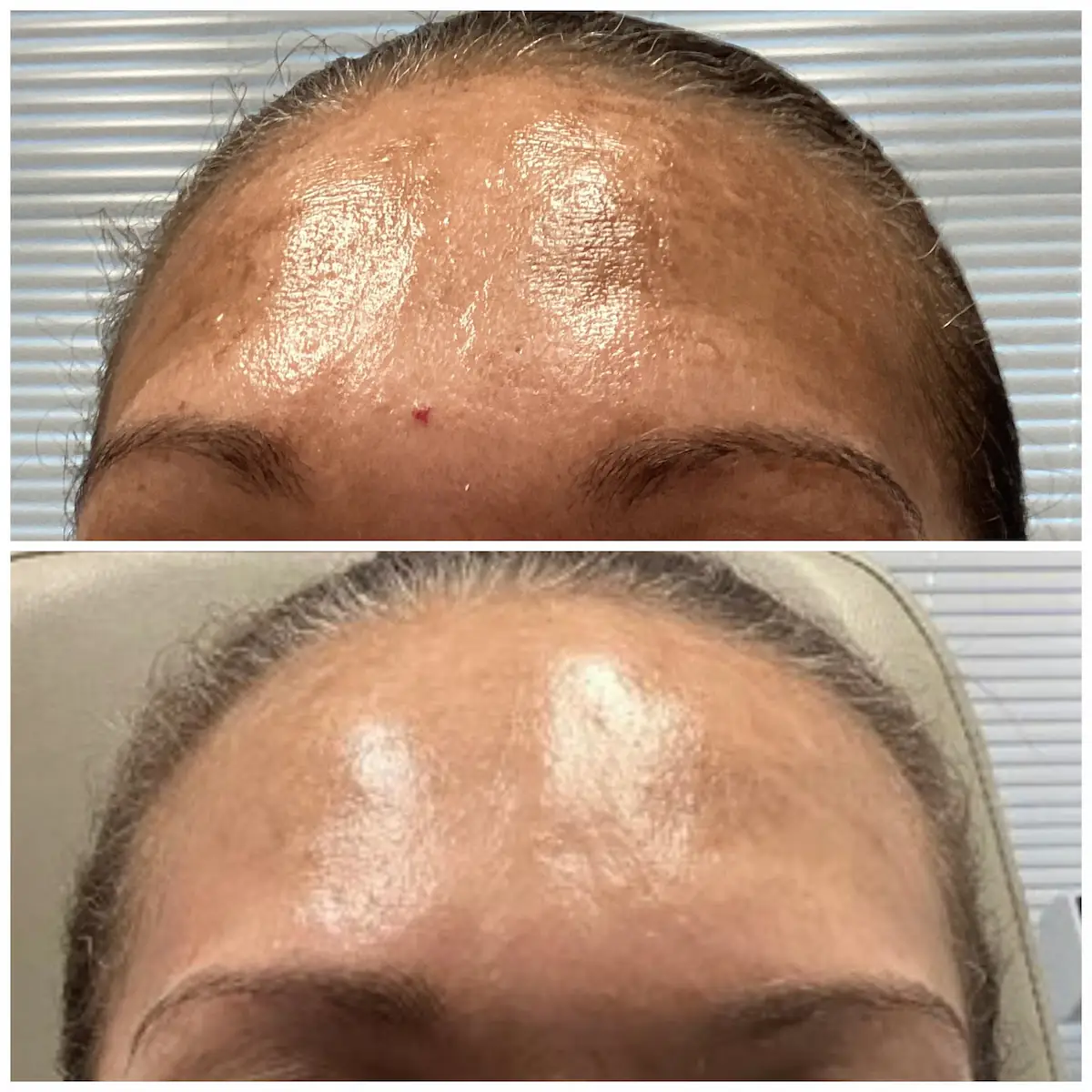
How We Treat Hyperpigmentation
- M22 IPL. For sun spots and brown spots, M22 intense pulsed light, performed in our Jacksonville office, targets the excess pigment directly; treated spots darken briefly, then flake away over a series of sessions.
- Chemical peels. Peels lift pigmented outer layers and brighten overall tone, for the face and for sun-spotted areas like the chest and hands.
- Prescription topicals. Physician-directed lightening agents and retinoids fade pigment at the source and are often the backbone of a melasma plan.
- Medical-grade skincare. Curated regimens with ingredients like kojic acid, azelaic acid, and arbutin manage pigment day to day and protect your in-office results.
One honest nuance: melasma is heat-sensitive, and the wrong light-based treatment can make it worse. That’s why melasma plans typically lead with topicals and carefully chosen peels, and why having a dermatology provider match the tool to the pigment type, and to your skin tone, is the whole game.
Your Pigment Plan
1
Diagnosis
Melasma, PIH, and sun spots each need a different plan, and anything suspicious gets a medical look first. Your provider identifies exactly what your pigment is before treating it.
2
Your plan
A written plan matched to your pigment type and skin tone: in-office treatments where they help, topicals and skincare doing the daily work, and honest timelines, usually weeks to months.
3
Protect and maintain
Pigment returns with sun, so daily broad-spectrum SPF 30+ is the non-negotiable, along with hats, antioxidants like vitamin C, and not picking at healing skin. Maintenance keeps the result you earned.
Results vary. Many pigment concerns improve substantially with treatment; some types, melasma especially, are managed rather than cured and can return without maintenance and sun protection.
Schedule a Hyperpigmentation Consultation in Jacksonville
If dark spots or uneven tone are what you see first in the mirror, a diagnosis and a matched plan will do more than another over-the-counter serum. We welcome patients from across the Jacksonville area, including Arlington and Intracoastal West, at our office at 6817 Southpoint Pkwy, Suite 101. Send a request through our contact page, or call (904) 420-7372 to speak with our team. You can also review our pricing page.
Common questions
Hyperpigmentation FAQs.
Is hyperpigmentation permanent?
Many types respond very well to treatment: sun spots and PIH often fade substantially or clear. Some types, melasma above all, are managed rather than cured and can return, especially with sun exposure or hormonal shifts. Your provider will tell you honestly which category your pigment falls into before you spend a dollar treating it.
How long until I see results?
Timelines vary by treatment and pigment type, but most patients notice improvement within weeks to months. IPL-treated spots typically darken and flake within days of each session; topicals work more gradually over months. Your plan spells out what to expect and when. Results vary by individual.
Do these treatments work on darker skin tones?
Yes, with the right approach, and that qualifier matters. Deeper skin tones are more prone to PIH, including from overly aggressive treatment, so tool selection and settings are chosen for your skin, not applied one-size-fits-all. Treating pigment safely across skin tones is a core part of how we plan every case.
Why is melasma treated differently from sun spots?
Melasma is hormone-driven and heat-sensitive; the wrong light-based treatment can darken it. Sun spots, by contrast, respond beautifully to IPL. That’s why melasma plans usually lead with prescription topicals and carefully chosen peels, and why the diagnosis step isn’t a formality.
Does insurance cover hyperpigmentation treatment?
Cosmetic pigment treatment is typically paid directly. Evaluation of a new or changing dark spot is a medical visit and may be covered depending on your plan; we’re upfront about which is which, and current information is on our pricing page.
Even tone, honestly earned.
Hyperpigmentation treatment matched to your pigment type and skin tone, for melasma, sun spots, and dark marks. Physician-owned and independent, in Jacksonville.