
Home / Medical Dermatology / Skin Tags
Skin Tag Removal in Jacksonville
Skin tags are harmless, but that doesn’t mean you have to live with them. Removal is one of the quickest visits in dermatology: a short in-office treatment, done after a proper look at the growth itself. At Jacksonville Dermatology & Cosmetic Surgery, skin tags are evaluated and removed by our experienced providers under the medical direction of Dr. Brandon T. Beal, a double board-certified, fellowship-trained dermatologist.
Double board-certified
Dr. Beal holds board certification in dermatology and Mohs micrographic surgery.
Fellowship-trained
Advanced training under Drs. Zitelli and Brodland.
Physician-owned
Independently owned small business, never a corporate chain.
Southpoint, Jacksonville
Off I-95 at Southpoint, minutes from most of Jacksonville and the beaches.
What Are Skin Tags?
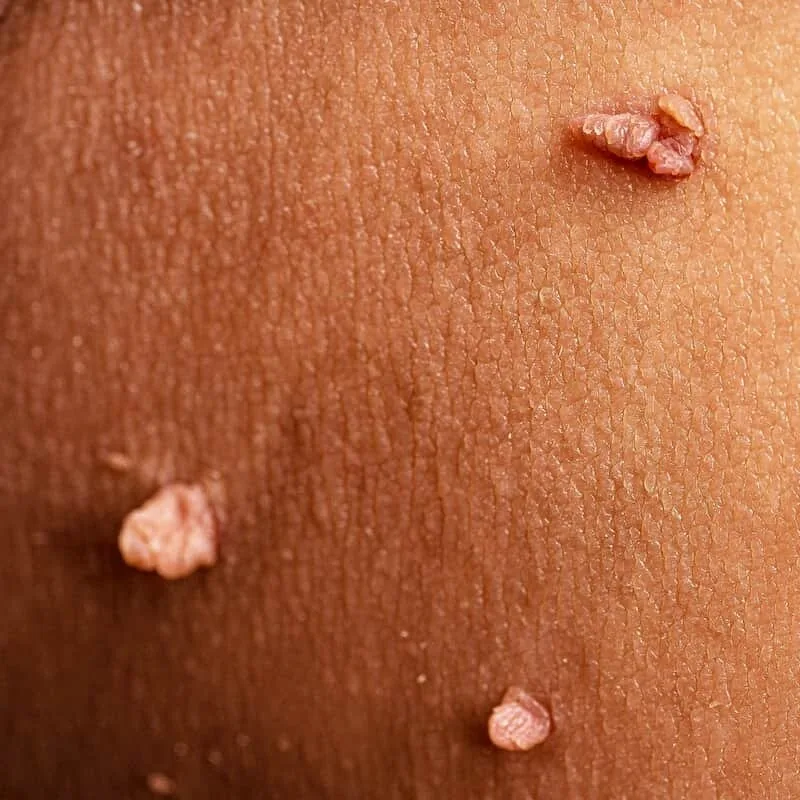
Skin tags (the medical term is acrochordons) are small, soft, benign growths connected to the skin by a thin stalk. They’re extremely common, tend to appear as people age, and show up most often where skin rubs against skin or clothing: the neck, underarms, eyelids, under the breasts, the groin, and the thighs.
Skin tags are not dangerous and don’t have to be removed. But “harmless” and “welcome” are different things. In Florida’s heat, where sweat and friction do their work year-round, skin tags in high-rub spots have a way of making themselves known.
Why Have a Skin Tag Removed?
- Irritation. Skin tags catch on necklaces, collars, razors, bra lines, and seatbelts. A snagged tag can twist, hurt, or bleed, and a repeatedly irritated one only gets more annoying.
- Location. Tags on the eyelids, neck, and other visible spots draw the eye, and plenty of patients simply prefer them gone for cosmetic reasons. That’s a perfectly good reason.
- Certainty. Not everything that looks like a skin tag is one. Moles, warts, and other growths can mimic them, which is why every removal here starts with an exam by a dermatology provider. If a growth is changing, bleeding without irritation, or just looks different from your others, that’s worth an evaluation on its own, and a full-body skin cancer screening if it’s been a while. If it turns out to be a mole rather than a tag, we handle that too: see non-surgical mole removal.
How We Remove Skin Tags
Diagnosis is usually straightforward: an exam by a dermatology provider is frequently all that’s needed. Removal is then matched to the tag’s size and location:
- Snip removal. The tag is removed at the stalk in seconds. For most small and medium tags, this is the go-to.
- Cryotherapy. Freezing with liquid nitrogen destroys the tag, which then falls away as the skin heals over the following days.
- Cautery. Heat-based treatment removes the tag and helps minimize any bleeding at the same time.
Whichever method fits, the visit is quick, the area can be numbed for comfort, and several tags can often be addressed in a single appointment; your provider will tell you what’s reasonable in one visit. Most patients resume normal activities the next day. All procedures carry some risk, but complications from skin tag removal are uncommon.
One thing we’ll say plainly: skip the home remedies and drugstore kits. Tying off, cutting, or freezing a growth yourself risks irritation, infection, and scarring, and it removes the one step that actually matters, which is a professional confirming what the growth is before it comes off.
Your Skin Tag Removal Visit
1
Evaluation
Your provider examines the growth to confirm it’s a skin tag and not something that needs a different plan, then reviews which tags you’d like removed.
2
Removal
The area can be numbed for comfort, and the tag is removed by snip, freezing, or cautery. Individual tags take seconds; even a handful makes for a short visit.
3
Healing
You’ll leave with simple aftercare instructions. Treated spots typically heal within days, and most patients are back to normal activities the next day.
Schedule Skin Tag Removal in Jacksonville
If a skin tag is snagging, rubbing, or just something you’re tired of seeing, it can usually be gone after one short visit. We welcome patients from across the Jacksonville area, including St. Johns, Nocatee, and Julington Creek, at our office at 6817 Southpoint Pkwy, Suite 101. Send a request through our contact page, or call (904) 420-7372 to speak with our team. You can also review our pricing page.
Common questions
Skin Tag FAQs.
Does skin tag removal hurt?
Not much, and not for long. The area can be numbed beforehand, individual tags come off in seconds, and afterward the spot typically feels like a small scrape while it heals. Most patients are surprised how quick the whole thing is.
Do skin tags grow back after removal?
A properly removed skin tag typically does not grow back. However, people who are prone to skin tags can develop new ones in other spots over time, especially in friction-heavy areas. New tags can be removed the same way, and some patients simply come in periodically to clear whatever has appeared.
Can I remove a skin tag at home?
We’d advise against it. Home tying, cutting, and freezing kits risk irritation, infection, and scarring, and they skip the diagnosis. The value of in-office removal isn’t just the technique; it’s having a dermatology provider confirm the growth actually is a skin tag before it comes off.
Does insurance cover skin tag removal?
Usually not. Because skin tags are benign growths, insurance companies often consider removal cosmetic and it’s typically an out-of-pocket cost. We’re upfront about this before anything is removed, and current information is on our pricing page.
How do I know it’s a skin tag and not something else?
You often can’t be certain on your own, and that’s fine; that’s what the exam is for. Moles, warts, and other growths can look similar. Your provider confirms the diagnosis before removal, and if a growth is changing, bleeding on its own, or looks different from your others, mention it: that one deserves attention regardless.
One short visit, and it’s gone.
In-office skin tag removal with a real evaluation first. Physician-owned and independent, in Jacksonville.