
How PDT treats actinic keratosis, what the visit feels like, sun precautions afterward, and who may be a good candidate.
Actinic keratosis is one of the most common findings at a skin exam in Florida, and photodynamic therapy (PDT) is one way to treat it without needles or incisions. Here is how PDT works, what the visit and recovery are like, and who it may suit. PDT is one of three light-based options on our laser treatments page. Schedule an appointment online or call (904) 420-7372.
Seeing patients in Jacksonville, FL
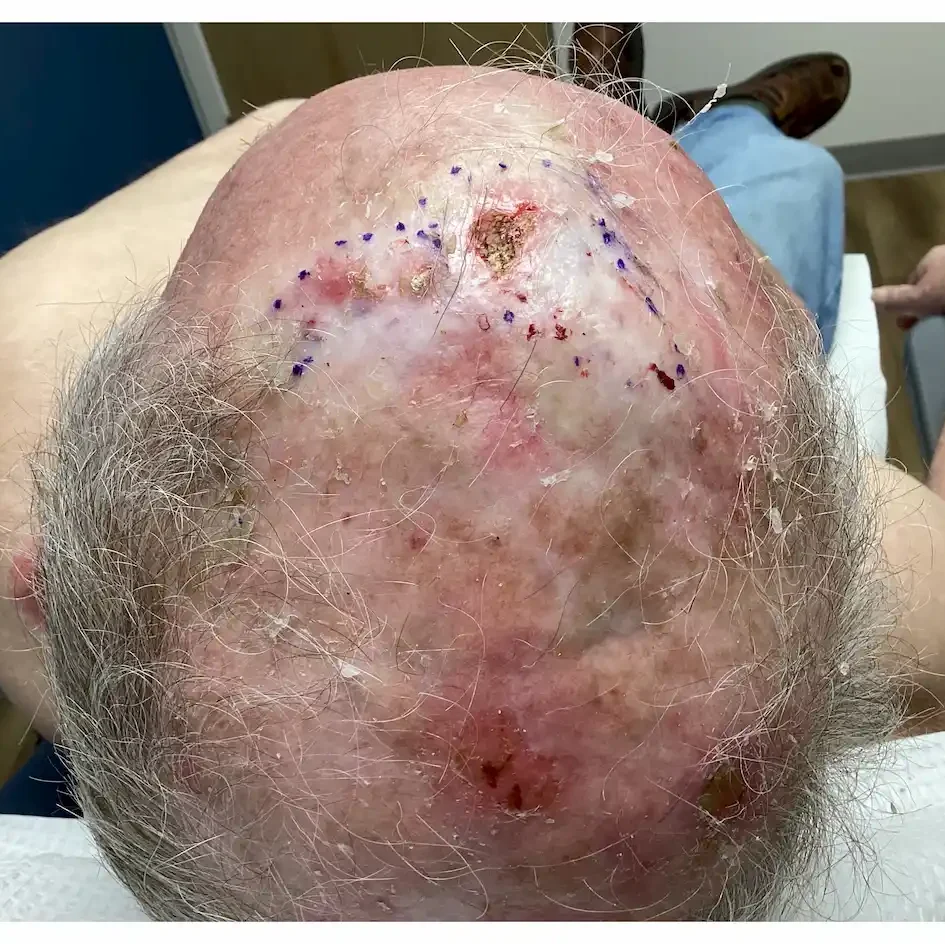
What is Actinic Keratosis?
Actinic keratosis (AK) is a rough, dry, or scaly patch caused by years of sun exposure. It often appears on the face, scalp, ears, lips, forearms, and backs of the hands. AKs are considered precancerous because some can progress to squamous cell carcinoma, a type of skin cancer, if they are left untreated.
Why Treat Actinic Keratosis?
Treating AKs lowers the chance they progress and can improve how sun-damaged skin looks and feels. AKs also tend to show up in groups, often with nearby sun damage that is not yet visible. That is one reason a treatment that covers an area of skin, rather than one spot at a time, can be useful.
How Does Photodynamic Therapy Work?
PDT uses a light-activated medication and blue light together. The process has three steps:
- Medication. A photosensitizing agent, usually aminolevulinic acid (ALA), is applied to the skin, where it collects in damaged or abnormal cells.
- Incubation. The medication stays on the skin, typically from 30 minutes to a few hours, so those cells can absorb it.
- Blue light. The area is exposed to blue light for about 15 to 30 minutes, which activates the medication in the damaged cells while leaving healthy tissue intact.
At our office, blue light therapy and photodynamic therapy are the same offering.
What Does PDT Feel Like?
Most patients feel warmth, tingling, or mild stinging while the light is on. The sensation usually eases soon after the light is turned off. There are no needles or incisions involved.
What Should You Expect After Treatment?
Redness and peeling are common, a bit like a sunburn, and usually settle over several days. Sunscreen goes on before you leave. Treated skin is temporarily more sensitive to light, so you will need to avoid direct sunlight for at least 48 hours. Here in Florida, that means planning your appointment around a couple of quieter days indoors, and your provider will help you choose the timing.
How Many PDT Treatments Will You Need?
Actinic keratosis is often treated in one to two sessions, followed by an evaluation to see how your skin responded. Some patients with ongoing sun damage choose periodic treatments over time. Your provider will recommend a plan based on your skin, and results differ from person to person.
Who May Be a Good Candidate for PDT?
PDT may be a good fit if you have multiple AKs or sun-damaged skin and prefer a non-invasive option with limited downtime. PDT is not recommended for people with severe light sensitivity, those taking medications that increase sun sensitivity, or anyone with an active skin infection or open wound in the treatment area. Share your full health history and medication list at your consultation.
How Does PDT Fit With Skin Cancer Screenings?
AKs are often found during a full-body skin cancer screening, and regular screenings help catch new ones early. If you have not had a skin check recently, that is a good place to start. Your provider can examine your skin, identify AKs or other spots that need attention, and discuss whether PDT or another treatment is right for you.
Who Performs PDT at Our Office?
PDT is performed by our experienced medical providers under the medical direction of Dr. Brandon T. Beal, a double board-certified, fellowship-trained dermatologist. Our practice is physician-owned and independently owned, and we see patients from across Jacksonville and Fleming Island at our Southpoint office.
Results vary. A consultation is required to determine whether photodynamic therapy is appropriate for you, and treatment plans are individualized.

Noticed Rough or Scaly Spots That Keep Coming Back?
Have them checked. An exam can tell you what they are and which treatment makes sense for your skin. Schedule an appointment online or call (904) 420-7372.
Seeing patients in Jacksonville, FL