
Home / Cosmetic Dermatology / Chemical Peels
Chemical Peels in Jacksonville
A chemical peel is one of the oldest tools in dermatology because it works: a carefully chosen solution resurfaces the skin, lifting away sun spots, dullness, and rough texture to reveal brighter, more even skin underneath. At Jacksonville Dermatology & Cosmetic Surgery, peels are selected and performed in a dermatology office, matched to your skin and your goals, under the medical direction of Dr. Brandon T. Beal, a double board-certified, fellowship-trained dermatologist.
Double board-certified
Dr. Beal holds board certification in dermatology and Mohs micrographic surgery.
Fellowship-trained
Advanced training under Drs. Zitelli and Brodland.
Physician-owned
Independently owned small business, never a corporate chain.
Southpoint, Jacksonville
Off I-95 at Southpoint, minutes from most of Jacksonville and the beaches.
What Is a Chemical Peel?
A chemical peel is a facial resurfacing technique. A chemical solution is applied to the skin, creating a controlled exfoliation that removes damaged outer layers and stimulates collagen and elastin as the skin renews. The result is smoother texture, more even tone, and improvement in pigment irregularities like sun spots and melasma.
Most peels are performed for cosmetic reasons, but they can also soften acne scars and treat precancerous growths (actinic keratoses). And here’s the part that matters in a market full of spa peels: the chemical, the concentration, and the depth are medical decisions. Having a dermatology provider choose and perform your peel is the difference between a result and a regret.
Types of Chemical Peels We Offer
Superficial peels (the “lunch break” peel)
Milder acids like salicylic or glycolic acid exfoliate the outer skin layer, refreshing tone and brightness with minimal recovery. Superficial peels can improve pigment irregularities such as sun spots and melasma, and they work on more than the face: the neck, chest, and hands respond well too. Many patients do these in a series for cumulative results.
Medium to deep peels
Stronger solutions, trichloroacetic acid (TCA) or Jessner’s, reach the skin’s middle and deeper layers. These are the peels for acne scars, superficial to moderate wrinkles, and fuller facial rejuvenation. The results go deeper, and so does the recovery, which your provider will walk you through honestly before anything is scheduled.
What Chemical Peels Can Improve
- Sun spots and melasma. Pigment irregularities are the classic peel target, and Florida produces plenty of them. For brown spots, peels work alongside topicals and our other hyperpigmentation treatments, including M22 IPL.
- Fine lines. Softening of fine lines under the eyes and around the mouth, with deeper peels doing more. For texture and lines beyond a peel’s reach, the ResurFx fractional laser is the complementary tool, and your provider will tell you which fits your goals.
- Acne and acne scars. Peels help unclog pores in active acne and are a core part of our acne scar treatment lineup.
- Precancerous growths. Certain peels treat actinic keratoses, the rough, scaly patches of long-term sun damage, alongside options like photodynamic therapy. If it’s been a while since your skin was checked head to toe, pair this with a full-body screening.
- Overall dullness. Sometimes skin just needs a reset. A peel is the fastest honest way to get one.
Your Peel, Start to Finish
1
Consultation and prep
Your provider evaluates your skin and goals and selects the right peel. Tell us about any history of cold sores or current infections; some patients prepare the skin with retinoids or hydroquinone for up to a month first, which improves outcomes and reduces side effects.
2
Treatment day
Your skin is cleansed, then the solution is applied: about 15 minutes for superficial peels, closer to 30 for medium to deep. You may feel warmth for the first several minutes, then a stinging sensation; cool compresses keep you comfortable throughout.
3
Recovery
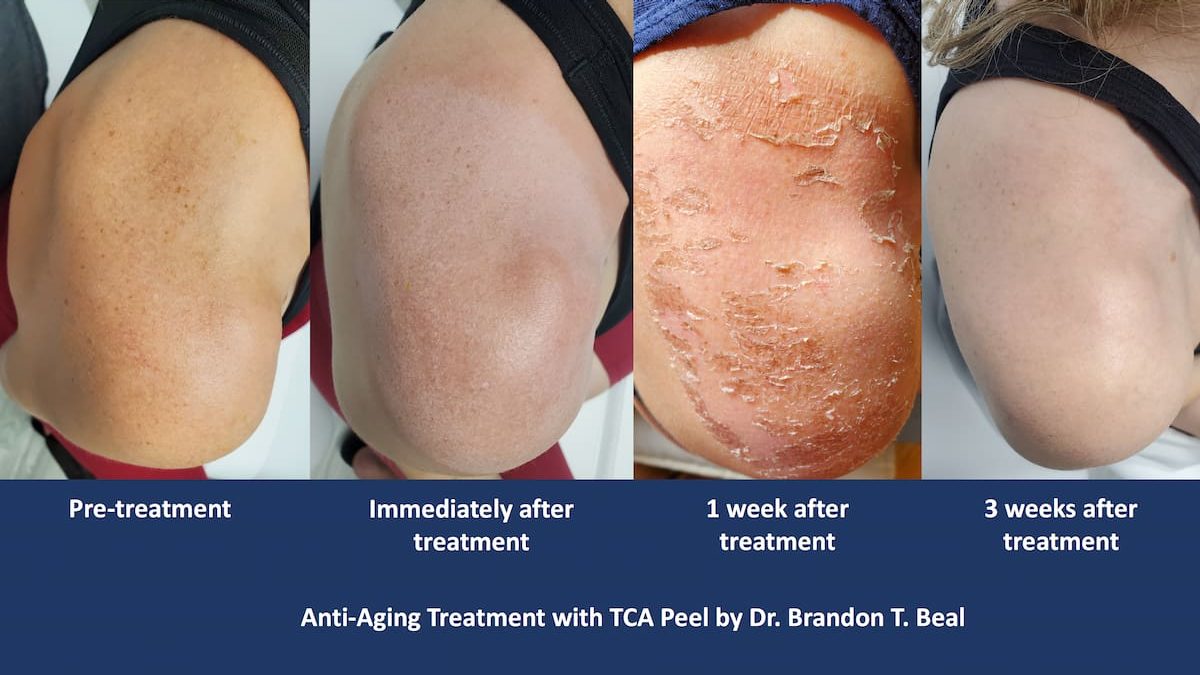
Superficial peels: temporary flaking, redness, or dryness for a few days. Medium to deep peels: scaling, redness, and sometimes swelling, healing over 7 to 10 days. Sun protection during healing is mandatory, and it also makes your results last longer.
What Recovery Really Looks Like
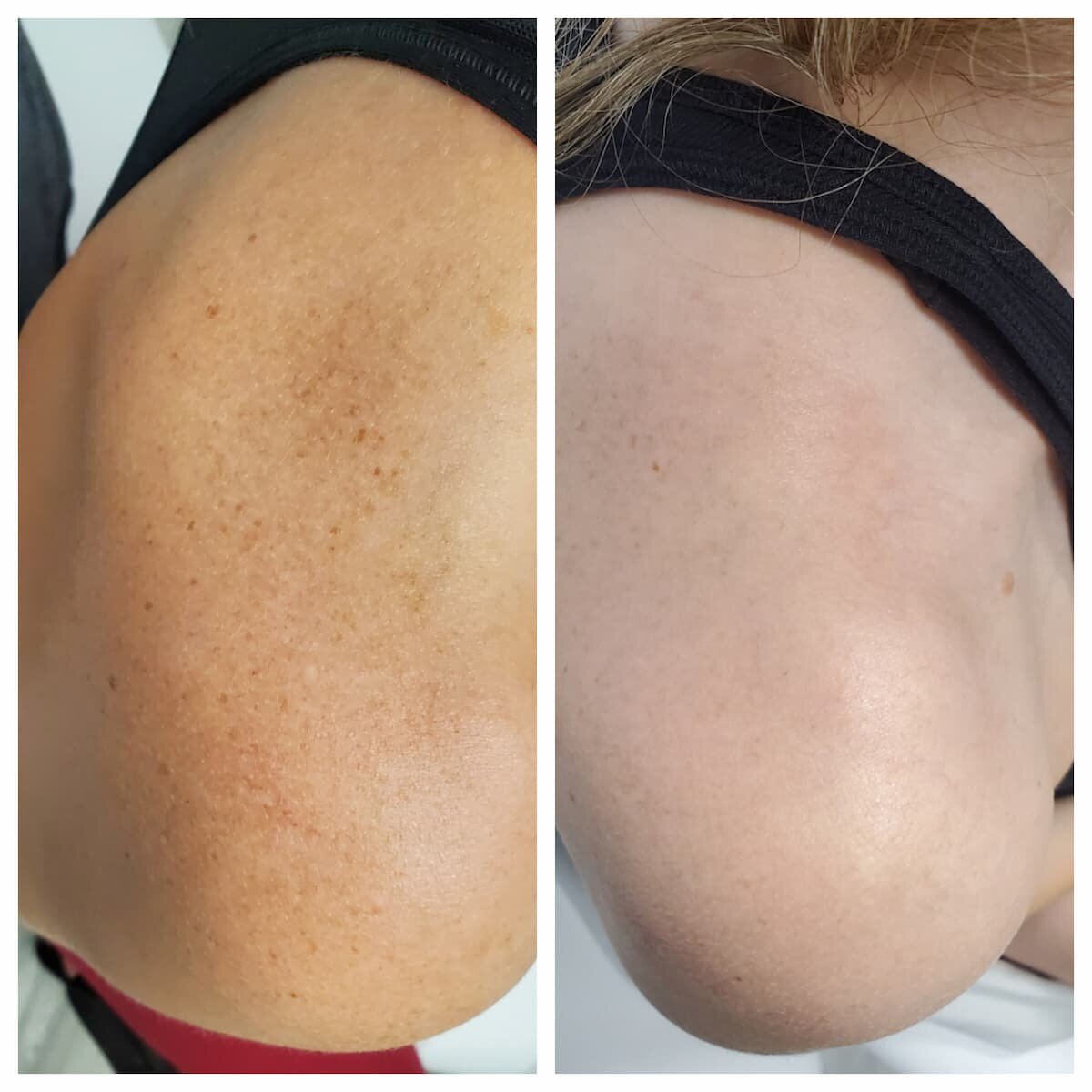
We’d rather show you the middle than surprise you with it. The timeline here is a real TCA peel patient: sun-spotted skin before treatment, redness immediately after, visible peeling at one week, and the result at three weeks. That one-week photo is what a medium peel is supposed to look like mid-process; the skin is doing exactly what the treatment asks of it.
Honest expectations are part of the treatment. Deeper peels carry more risk along with more result: possible redness, temporary or prolonged pigment changes, crusting, swelling, and sun sensitivity, and for patients with a history of cold sores, an antiviral may be prescribed beforehand, since peels can trigger reactivation. Your provider reviews all of it with you, matched to the peel you’re actually getting, before anything touches your skin.
Schedule a Chemical Peel Consultation in Jacksonville
Whether you’re after a brighter complexion before an event or a real plan for sun spots, melasma, or acne scarring, start with a consultation; the right peel is a decision, not a menu item. We welcome patients from across the Jacksonville area, including Southside and St. Johns, at our office at 6817 Southpoint Pkwy, Suite 101. Send a request through our contact page, or call (904) 420-7372 to speak with our team. You can also review our pricing page.
Common questions
Chemical Peel FAQs.
Which chemical peel is right for me?
That’s the consultation’s job, and it depends on your skin type, your goals, and how much recovery fits your life. Broadly: superficial peels for brightness, tone, and mild pigment with minimal downtime; medium to deep peels for acne scars, wrinkles, and stubborn sun damage with a real healing week. Your provider will recommend one honestly, including “not a peel” when something else fits better.
How many peels will I need?
Superficial peels are often done in a series, with results building over several sessions and periodic maintenance after. A single medium to deep peel can deliver a bigger change in one round. Your plan will spell out the expected number of sessions before you commit. Results vary by individual.
How much downtime should I plan for?
Superficial peels: a few days of flaking, redness, or dryness that most people work right through. Medium to deep peels: visible peeling and redness with healing over 7 to 10 days, so plan around events. Strict sun protection during healing isn’t optional either way, and it protects your results.
Chemical peel or laser?
They’re teammates more than rivals. Peels excel at surface pigment, tone, and texture; the ResurFx fractional laser works deeper on lines and acne scarring, and M22 IPL targets brown spots and redness at the vessel and pigment level. Plenty of plans use more than one. Your provider will map your goals to the right tool rather than the other way around.
Does insurance cover chemical peels?
Cosmetic peels are typically paid directly. When a peel is used to treat precancerous growths, the medical picture can differ depending on your plan. We’re upfront about which is which before anything is scheduled, and current information is on our pricing page.
Resurfaced, the medical way.
Chemical peels selected and performed in a dermatology office, with honest expectations at every step. Physician-owned and independent, in Jacksonville.