
If you have a persistent, worsening, or significantly uncomfortable rash, a dermatology evaluation may help determine the cause and appropriate treatment.
Skin rashes are very common and can happen to people of all ages. Some rashes appear suddenly and disappear within a few days, while others may linger, spread, or become increasingly uncomfortable.
Because rashes can have many different causes—from mild irritation to chronic skin conditions—it can sometimes be difficult to know when a rash can be managed at home and when it should be evaluated by a dermatologist.
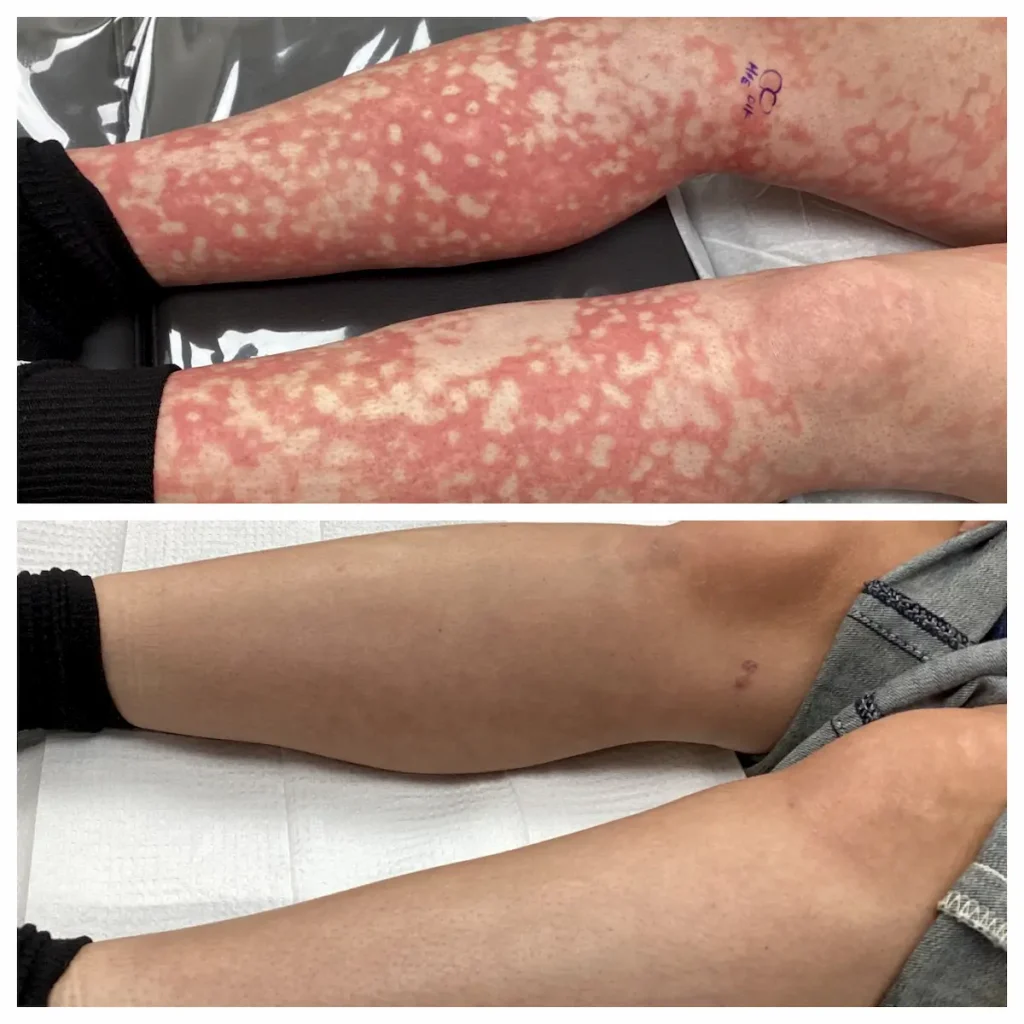
What Is a Skin Rash?
A rash is a broad term for visible changes in the skin’s appearance or texture. Rashes can vary widely depending on their underlying cause.
Common features of rashes may include:
- Redness
- Itching
- Dry or scaly patches
- Bumps or blisters
- Swelling
- Skin discoloration
- Crusting or oozing
Some rashes are temporary reactions that resolve quickly, while others may signal an underlying dermatologic condition that requires medical care.
Common Causes of Skin Rashes
There are many possible causes of skin rashes. Dermatologists are trained to evaluate these differences and determine the most appropriate treatment.
Some of the most common causes include:
Eczema (Atopic Dermatitis)
Eczema is a chronic skin condition that often causes:
- Dry, itchy patches
- Red or inflamed skin
- Cracked or scaly areas
Eczema commonly appears on the hands, arms, legs, or face and may flare periodically.

Psoriasis
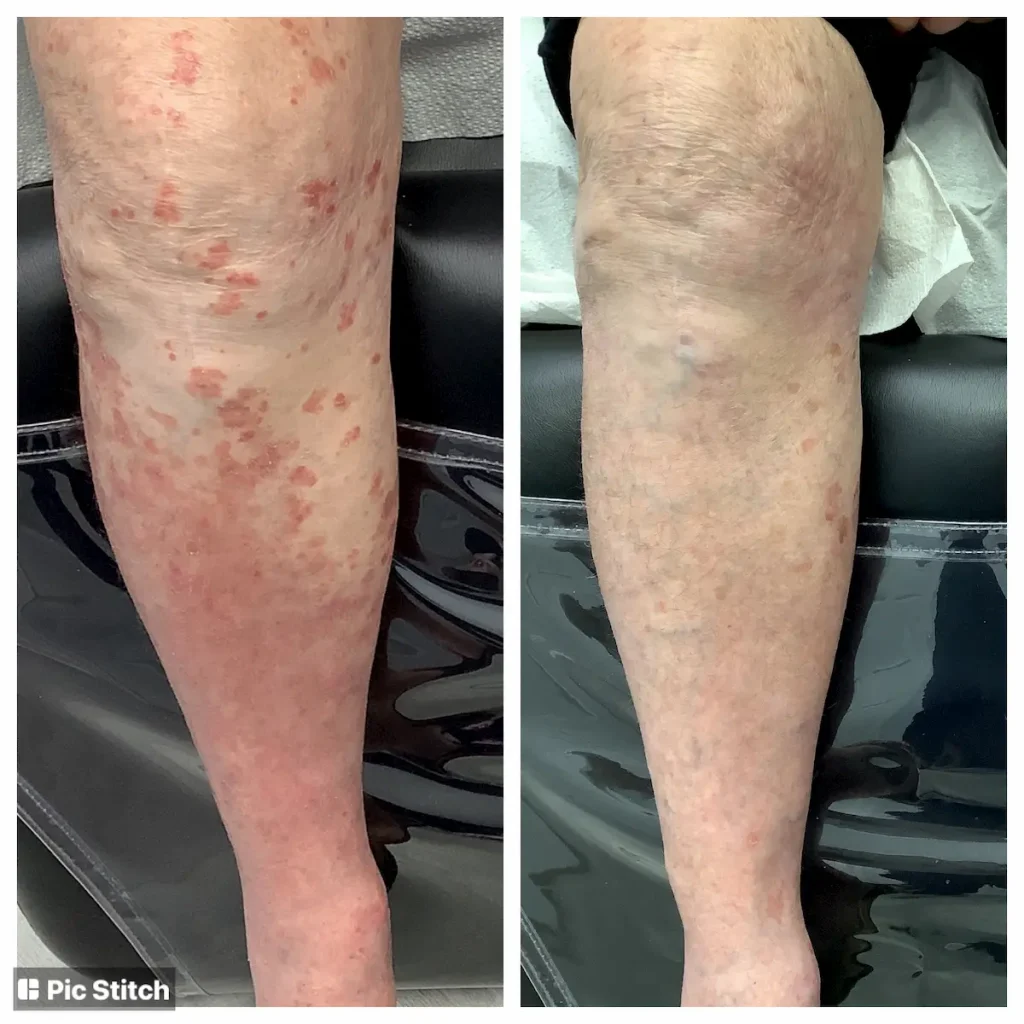
Psoriasis is an autoimmune condition that causes the skin to produce new cells more rapidly than normal.
It often appears as:
- Thick, scaly plaques
- Red or pink patches
- Silvery scale on the skin surface
Psoriasis frequently affects the elbows, knees, scalp, and lower back.
Fungal Skin Infections
Certain rashes are caused by fungal organisms that grow on the skin.
Examples include:
- Ringworm
- Athlete’s foot
- Yeast infections of the skin
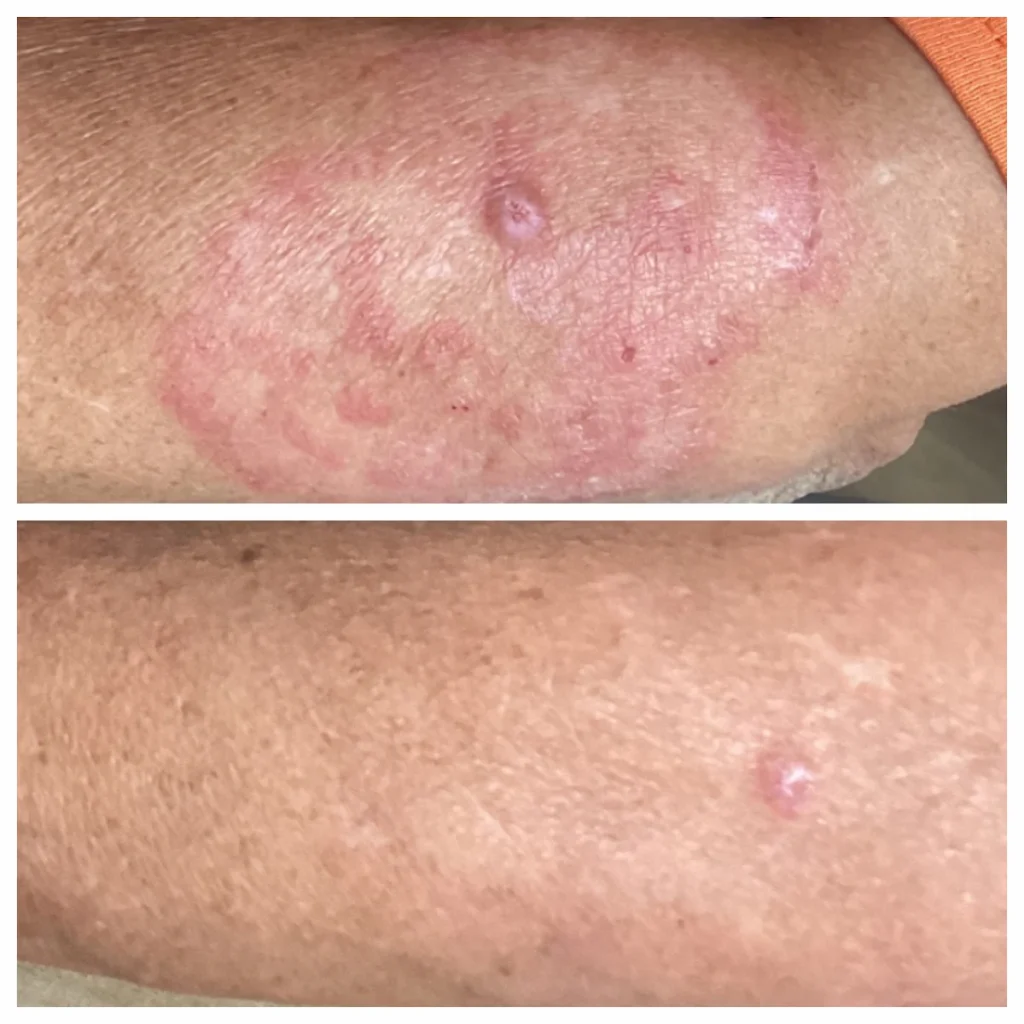
These rashes may appear as red, circular patches or itchy, scaly areas.
Signs You Should See a Dermatologist for a Rash
Certain symptoms may indicate that a rash requires medical evaluation.
The Rash Lasts More Than One Week
If a rash persists for more than 7–10 days without improvement, it may be helpful to have it examined.
Persistent rashes could indicate conditions such as:
- Eczema
- Psoriasis
- Fungal infections
- Allergic dermatitis
A dermatologist can identify the cause and recommend appropriate treatment.
The Rash Is Spreading
Rashes that continue spreading to new areas of the body should be evaluated. Spreading rashes may signal:
- Infection
- Allergic reactions
- Contagious skin conditions
The Rash Is Painful or Severe
Most mild rashes cause itching rather than pain. A painful, intensely inflamed, or swollen rash should be evaluated promptly. Painful rashes may indicate infection or inflammatory skin conditions.
The Rash Is Accompanied by Other Symptoms
If a rash occurs alongside symptoms such as:
- Fever
- Fatigue
- Joint pain
- Difficulty breathing
- Swelling of the face or throat
These symptoms could indicate an allergic reaction or systemic illness.
The Rash Is Blistering or Oozing
Rashes that develop:
- Blisters
- Open sores
- Crusting
- Oozing fluid
In some cases, these symptoms may indicate a bacterial infection or other conditions that require prescription medication.
The Rash Appears on the Face or Genitals
Because the skin in these areas is more delicate, rashes affecting the face, eyelids, or genital area are often best evaluated by a dermatologist. These areas may also require specialized treatment approaches.
The Rash Keeps Coming Back
Recurring rashes may be caused by underlying chronic conditions such as:
A dermatology provider can help identify triggers and develop a long-term management plan.
Why Seeing a Dermatologist Can Help
While many rashes look similar on the surface, their underlying causes may be very different. Dermatologists specialize in diagnosing and treating skin conditions and can determine whether a rash is caused by:
- Allergies
- Infection
- Autoimmune disease
- Chronic inflammatory skin conditions
Evaluation may include:
- Careful visual examination
- Review of medical history
- Skin testing or biopsy when needed
This helps ensure the correct diagnosis and treatment plan.

Schedule an Appointment Today
If you are experiencing a rash that is not improving or are unsure about its cause, scheduling an appointment with a dermatology provider can help provide answers and appropriate care. Contact us by either calling (904) 420-7372 or filling out our online contact form.
GET IN TOUCH