
Eczema, psoriasis, and contact dermatitis can look alike, but they’re not. Learn the key differences and when it’s time to see a dermatologist in Jacksonville.
If your skin has been red, itchy, or irritated for more than a few days, you’ve probably found yourself Googling symptoms at midnight, trying to figure out what’s actually going on. Eczema, psoriasis, and contact dermatitis are three of the most common skin conditions — and they can look remarkably similar at first glance. But they have different causes, different triggers, and different treatment approaches.
What Is Eczema?
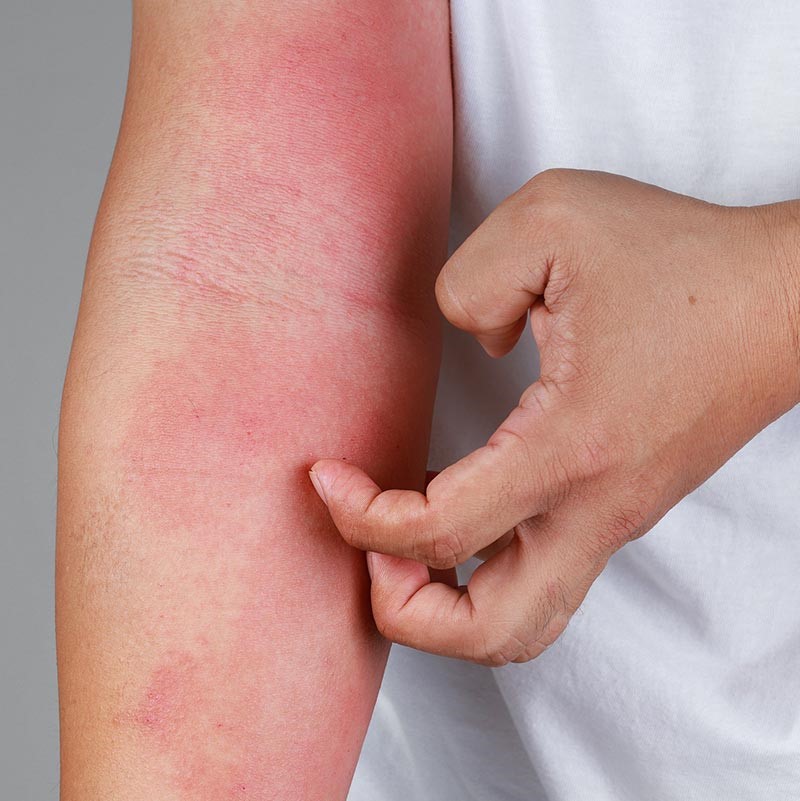
Eczema, also called atopic dermatitis, is a chronic inflammatory skin condition that tends to show up in the creases of the body — the insides of the elbows, behind the knees, on the neck, and around the wrists. The skin typically appears red, dry, and intensely itchy. In more active flares, it may weep, crust over, or become thickened from repeated scratching.
Eczema often begins in childhood and runs in families, particularly alongside asthma and seasonal allergies — a trio sometimes called the “atopic triad.” Adults can develop it too, or find that childhood eczema re-emerges under stress, hormonal changes, or seasonal shifts.
Common eczema triggers include dry air, sweat, rough fabrics, certain soaps and detergents, and stress. In Florida’s heat and humidity, flares can be unpredictable — the skin barrier is already working harder year-round.
What Is Psoriasis?
Psoriasis is an autoimmune condition, meaning the immune system mistakenly speeds up the skin cell cycle, causing cells to build up on the surface far faster than they can shed. The result is raised, thickened plaques covered in silvery or white scale. Psoriasis most commonly appears on the scalp, elbows, knees, and lower back — typically on the outer surfaces of joints rather than the creases.
Unlike eczema, psoriasis tends to be less intensely itchy (though it certainly can be) and more visually distinct due to that characteristic silvery scale. Nail changes — such as pitting or separation from the nail bed — are also common in patients with psoriasis and can be a helpful clue.
Psoriasis flares are often triggered by stress, certain medications, infections, and in some people, alcohol or smoking. It is a lifelong condition that benefits from consistent, medically supervised management.
What Is Contact Dermatitis?
Contact dermatitis is the skin’s reaction to something it comes into contact with — either an irritant or an allergen. Irritant contact dermatitis is more common and occurs when a substance directly damages the skin barrier: think harsh cleaning products, frequent handwashing, or repeated exposure to certain chemicals. Allergic contact dermatitis is an immune response to a specific substance, such as nickel in jewelry, latex, fragrance in skincare products, or poison ivy.
What sets contact dermatitis apart is its pattern and timing. The rash typically appears where the offending substance made contact — along a watch band, under a waistband, or on the hands. It usually develops within hours to days of exposure and improves once the trigger is removed.
Why An Accurate Diagnosis Matters
Here’s the thing: treating the wrong condition can make things worse. Steroid creams that help eczema may not be appropriate for long-term psoriasis management. Eliminating a harmless product won’t resolve a rash caused by an autoimmune response. A dermatologist can examine the affected area, take your history, and — when needed — perform a patch test or skin biopsy to confirm what’s actually happening.
Self-diagnosis, even with the best research, leaves room for frustration and delayed relief. If your skin has been persistently irritated, flaring, or spreading, that’s a signal worth taking seriously.
Ready To Get Some Answers?
Our dermatology team at Jacksonville Dermatology & Cosmetic Surgery sees patients dealing with all three of these conditions regularly — and we know how much chronic skin concerns can affect your quality of life. If you’re not sure what’s going on with your skin, we’d love to help you figure it out.
Call our Jacksonville office at (904) 420-7372 or fill out our online contact form to schedule an appointment. Results vary, and a consultation is required to determine the most appropriate treatment plan for your skin.
GET IN TOUCH