
Contact Dermatitis
Contact dermatitis causes red, itchy skin, but the trigger isn’t always obvious. Learn about types, symptoms, and treatment options.
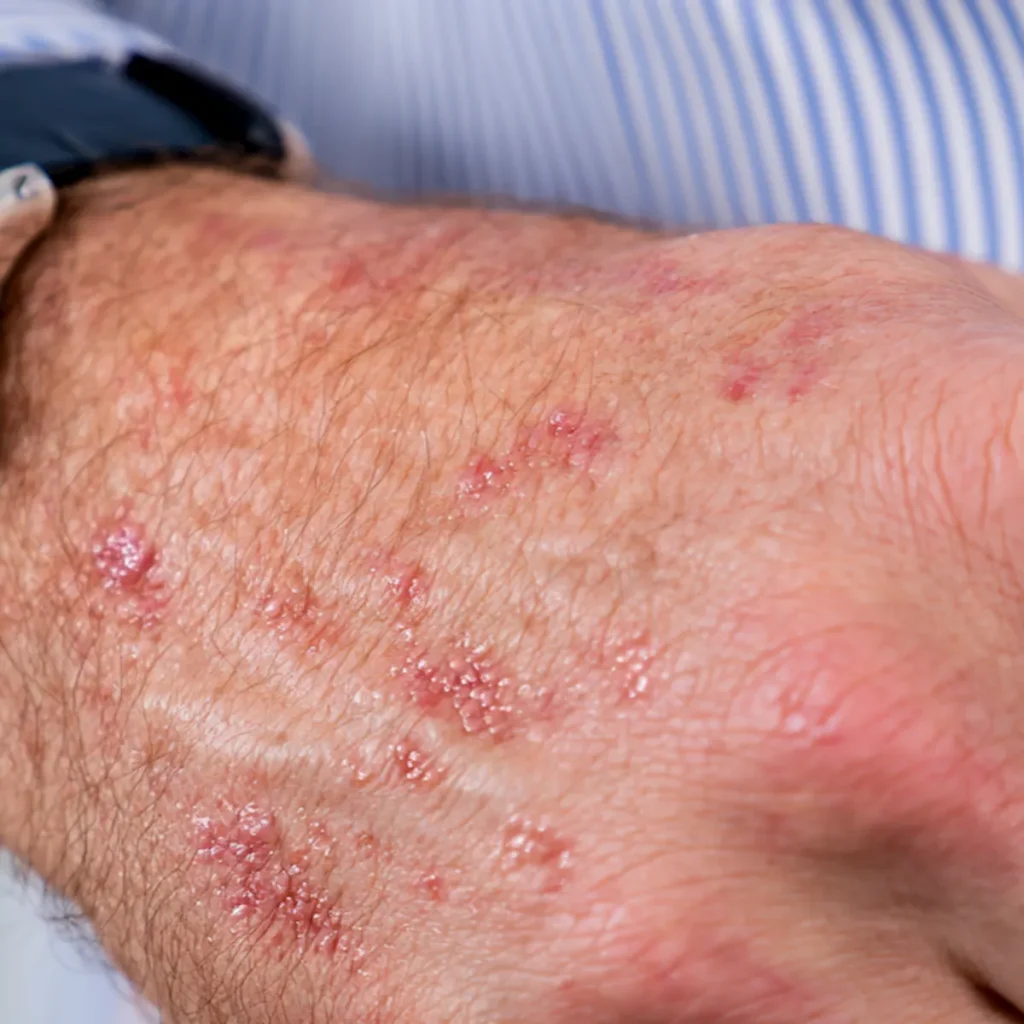
What is Contact Dermatitis?
Contact dermatitis is one of the most common skin conditions we see — and one of the most frequently misidentified. It’s an inflammatory reaction that occurs when the skin comes into contact with a substance that either irritates it directly or triggers an allergic immune response. The result is a rash that can range from mildly uncomfortable to severely disruptive, depending on the cause, the extent of exposure, and the individual’s skin sensitivity.
The Two Types Of Contact Dermatitis
Not all contact dermatitis is the same. There are two distinct forms, and distinguishing between them matters for treatment.
Irritant Contact Dermatitis
Irritant contact dermatitis is the more common of the two. It occurs when a substance directly damages the skin’s outer barrier — not because of an immune reaction, but because of the chemical or physical properties of the substance itself. Anyone exposed to a strong enough irritant for long enough can develop it, regardless of whether they’ve ever had a skin reaction before.
Common triggers include frequent hand washing, prolonged exposure to cleaning products or detergents, contact with solvents or chemicals in occupational settings, and repeated friction from clothing or equipment. Healthcare workers, food service workers, and those in cleaning or manufacturing roles are particularly susceptible due to the nature of their daily exposure.
The rash from irritant contact dermatitis tends to be confined to the area of contact and may appear dry, red, cracked, or raw. It may feel more burning or stinging than itchy, particularly in acute cases.
Allergic Contact Dermatitis
Allergic contact dermatitis is an immune-mediated response. The first time the skin encounters a particular allergen, there’s typically no visible reaction — but the immune system becomes sensitized to that substance. On subsequent exposures, it mounts a response, producing a red, itchy, often blistering rash.
This sensitization process can take months or even years to develop, which is why people sometimes develop an allergic reaction to a product they’ve used without issue for a long time. The reaction itself typically appears within 12 to 72 hours of exposure.
Common allergens include nickel (found in jewelry, belt buckles, and some clothing hardware), fragrances in skincare and personal care products, preservatives in cosmetics and topical medications, latex, hair dye ingredients, adhesives, and plants such as poison ivy, poison oak, and poison sumac.
Recognizing The Symptoms
Contact dermatitis can look different depending on its type, severity, and duration. In acute cases, the skin may appear red and inflamed, develop blisters or weeping areas, feel intensely itchy or burning, and swell in the affected area. In more chronic or long-standing cases — particularly with irritant dermatitis from repeated low-level exposure — the skin may become thickened, dry, scaly, or cracked without significant redness.
The pattern and location of the rash are often the most useful diagnostic clues. A rash that follows the outline of a watchband, forms a stripe across the abdomen where a waistband sits, or appears symmetrically on both earlobes where jewelry rests, is strongly suggestive of allergic contact dermatitis. A rash concentrated on the hands or forearms in someone with occupational chemical exposure points more toward the irritant form.
How Contact Dermatitis Is Diagnosed
Identifying contact dermatitis — and determining its type and cause — requires a thorough evaluation. A dermatologist will review the rash’s distribution and appearance, your exposure history, the timeline of the reaction, and any products or substances your skin has recently come into contact with.
For suspected allergic contact dermatitis, patch testing is the gold-standard diagnostic tool. Small amounts of common allergens are applied to the skin — typically on the back — and left in place for 48 hours before being read at 48 and 96 hours. This process can identify specific sensitivities that may not be obvious from history alone, and it’s particularly valuable when the rash keeps returning despite apparent avoidance of likely triggers.
Self-diagnosis and self-treatment without identifying the causative substance often leads to persistent or worsening symptoms, since the trigger remains in use.
Treatment Options
The cornerstone of treating contact dermatitis is identifying and eliminating the offending substance. Without that step, other treatments provide only temporary relief. Once the trigger has been addressed, treatment depends on the severity of the reaction:
- Topical corticosteroids are commonly prescribed to reduce inflammation and relieve itching. The appropriate strength and formulation depend on the location and severity of the rash — a dermatologist can determine what’s appropriate for your specific situation.
- Oral antihistamines may help manage itching, particularly at night, though they do not directly address the inflammatory process.
- Oral or injectable corticosteroids may be recommended for severe, widespread reactions that are not adequately controlled with topical treatment alone.
- Barrier repair and skin care adjustments are an important part of managing irritant contact dermatitis specifically. Restoring the skin barrier with appropriate moisturizers, avoiding further exposure to irritants, and modifying habits (such as wearing protective gloves) can significantly reduce recurrence.
- Avoidance guidance is a key part of the management plan for allergic contact dermatitis. Once a specific allergen is identified through patch testing, our team can help you understand where that allergen commonly appears — including in products you might not expect — and how to minimize future exposure.
For patients with occupational exposure, management may also involve recommendations around protective equipment, workplace accommodations, or modifications to daily workflow.
When To See A Dermatologist
You should consider scheduling an evaluation if:
- Your rash has persisted for more than two to three weeks despite avoiding apparent triggers
- The rash keeps returning after clearing up
- Over-the-counter treatments have not provided adequate relief
- The rash is spreading, severe, or interfering with daily activities
- You’re unsure what’s causing the reaction and want a definitive answer
Contact dermatitis is very manageable with the right diagnosis and a clear plan. Many patients find that once the trigger is identified, the path forward becomes straightforward.
Schedule An Evaluation In Jacksonville
At Jacksonville Dermatology & Cosmetic Surgery, our dermatology team evaluates and treats contact dermatitis for patients throughout Jacksonville, Orange Park, Ponte Vedra, and surrounding communities. Whether you’re dealing with a recurring rash, occupational skin irritation, or a reaction you haven’t been able to trace to a cause, we can help you get to the bottom of it.
Call our office at (904) 420-7372 or fill out our online contact form to request an appointment. A consultation is required to determine the appropriate evaluation and treatment plan for your individual case. Results and timelines vary.
GET IN TOUCH