
If acne scars are affecting your skin texture or confidence, an evaluation with a dermatology provider can help determine which treatments may be appropriate.
Acne can clear, but the scars it leaves behind may last much longer. For many patients, deep acne scars can affect skin texture and confidence even years after breakouts stop.
One treatment dermatology providers may recommend for certain types of acne scars is TCA CROSS. This targeted treatment is designed to improve deep, narrow scars that other treatments may struggle to address.
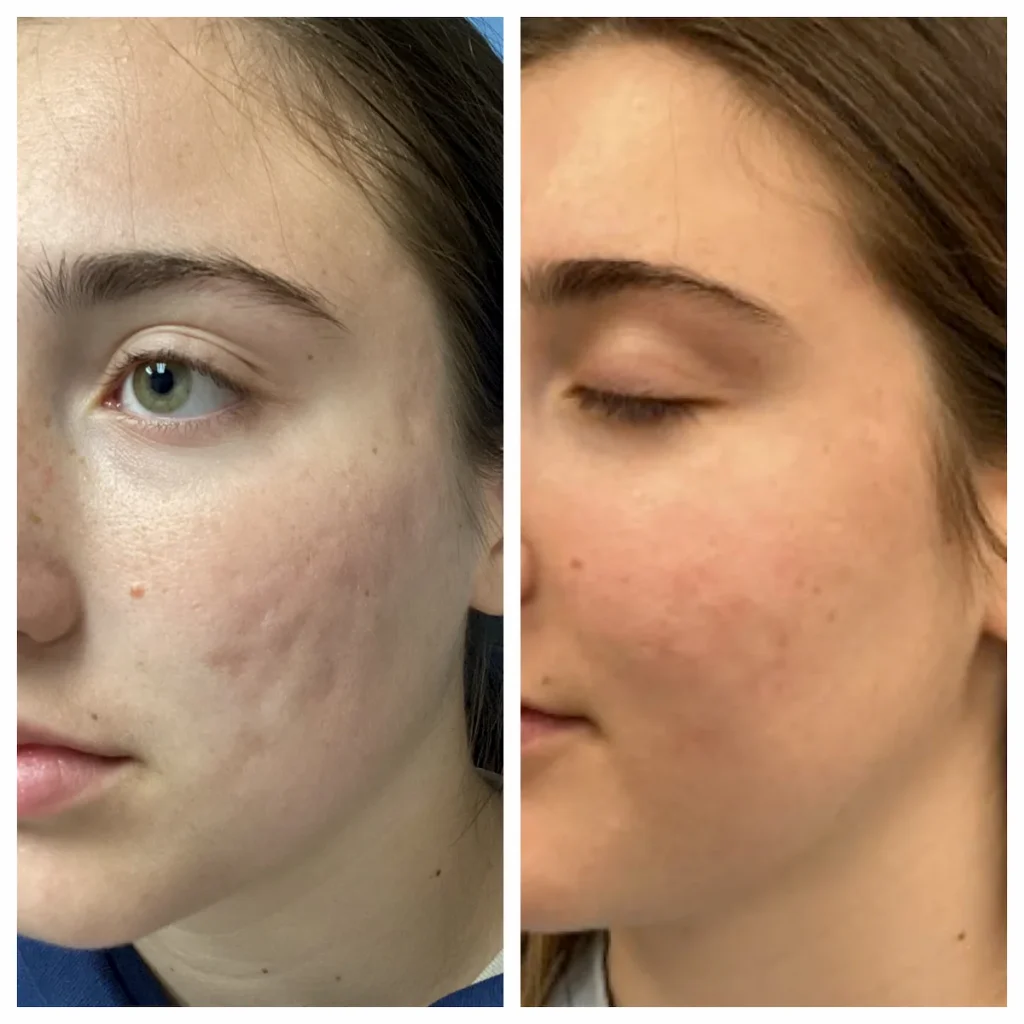


What Is TCA CROSS?
TCA CROSS stands for Trichloroacetic Acid Chemical Reconstruction of Skin Scars. It is a dermatologic technique that uses a high-concentration trichloroacetic acid (TCA) applied directly inside individual acne scars. This targeted application triggers a controlled skin response that may stimulate new collagen formation within the scar.
Over time, this process can help:
- Reduce the depth of certain acne scars
- Improve overall skin texture
- Make scars appear less noticeable
Unlike broader chemical peels that treat large areas of skin, TCA CROSS targets individual scars, making it especially helpful for deep, narrow scars that penetrate the skin. Results vary by individual, and multiple treatments are often needed to see gradual improvement.
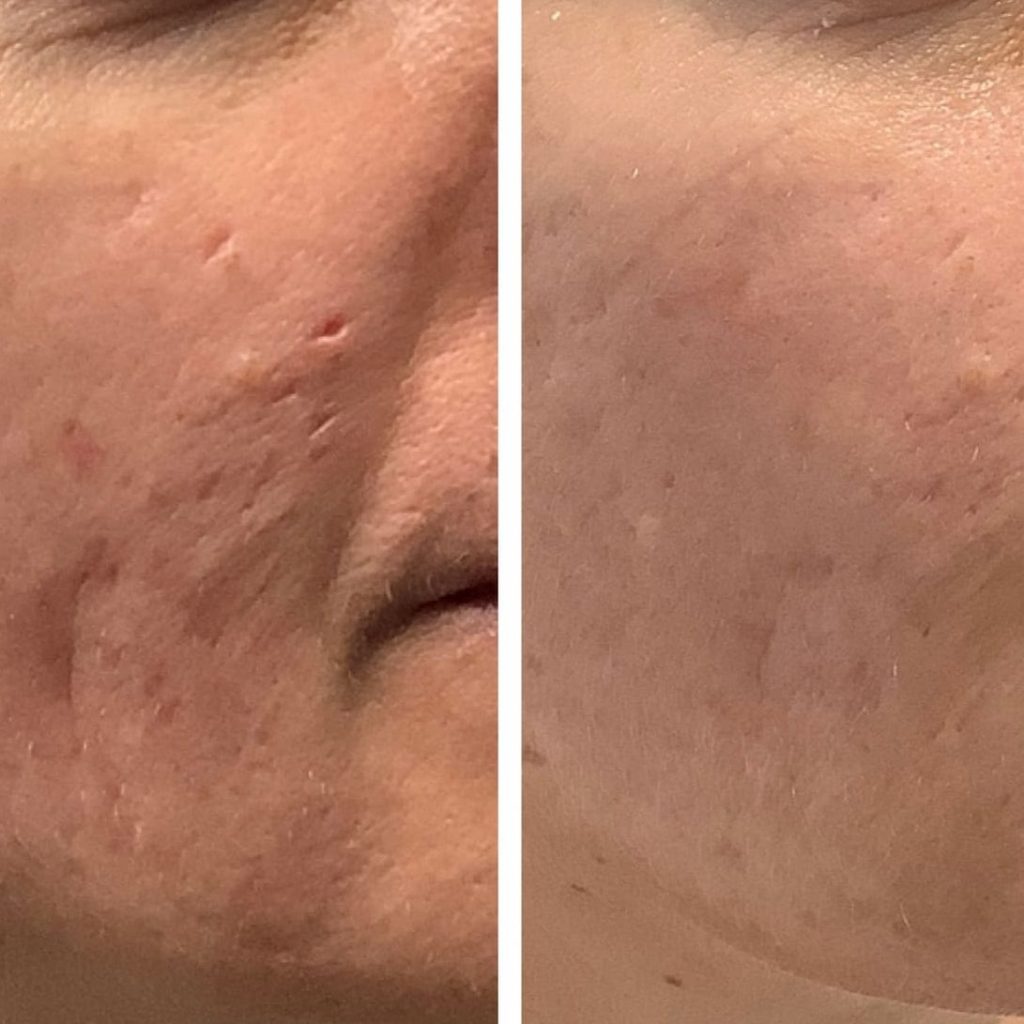
What Types of Acne Scars Can TCA CROSS Treat?
Not all acne scars are the same. Dermatologists typically categorize scars into several types. TCA CROSS is most commonly used for:
Ice Pick Scars
Ice pick scars are:
- Narrow
- Deep
- Sharp-edged
- Often extend deep into the skin
They can resemble small punctures or pits. These scars can be difficult to treat with many other methods, which is why TCA CROSS is often considered one of the most effective approaches for this specific scar type.
Narrow Boxcar Scars
Boxcar scars are:
- Wider than ice pick scars
- Have more defined edges
- Appear as depressions in the skin
Some narrow boxcar scars may respond well to TCA CROSS, particularly when they have steep edges.
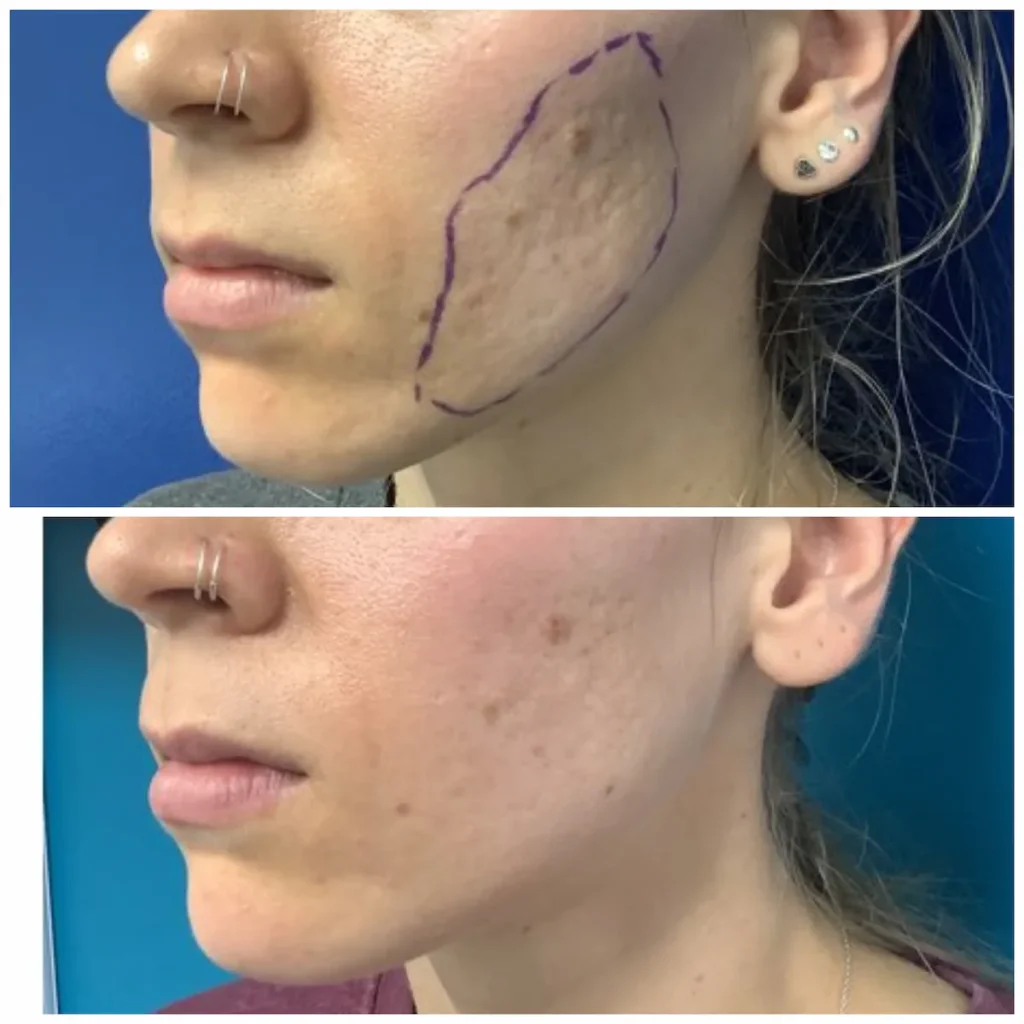
Scars That May Not Respond as Well To TCA CROSS
TCA CROSS is usually less effective for rolling scars, which are broader and caused by fibrous bands beneath the skin. Rolling scars are sometimes treated using other dermatologic techniques such as subcision, which may be combined with TCA CROSS depending on the patient.
A consultation helps determine the exact scar types present, which guides the treatment plan.
When TCA CROSS May Not Be Recommended
In some situations, other treatments may be more effective. Examples include:
- Rolling scars caused by deeper fibrous bands
- Active inflammatory acne
- Certain skin conditions affect healing
Many patients benefit from combination treatment plans that may include other dermatologic procedures, depending on the scar pattern.
How Many Treatments Are Needed?
Acne scars rarely improve after just one treatment. Most patients require multiple sessions spaced several weeks apart to achieve noticeable improvement. Common treatment plans may involve:
- 3 to 6 treatments
- Sessions spaced about 4–8 weeks apart
The exact number depends on:
- Scar type
- Scar depth
- Skin response
- Overall treatment goals
Our providers will evaluate your skin and recommend a personalized treatment plan.
How Long Does It Take to See Results?
Acne scar improvement occurs gradually because it depends on new collagen production. Most patients begin noticing changes over several months as the skin remodels. Visible improvement often develops:
- Between treatment sessions
- In the months following the final treatment
Results vary from person to person, and complete scar removal is not typically possible. The goal is usually meaningful improvement in depth and texture.
Are There Risks or Side Effects?
When performed by experienced medical providers, TCA CROSS is generally well tolerated. Possible side effects may include:
- Temporary redness
- Small scabs at treatment sites
- Temporary darkening of the skin (post-inflammatory hyperpigmentation)
Following aftercare instructions and using sun protection can help reduce these risks. Your dermatology provider will review potential risks before treatment.
Schedule a Consultation With Us Today
If you would like to learn whether TCA CROSS or other acne scar treatments may be appropriate for you, a consultation can help determine the best approach. Contact us today by either calling us at (904) 420-7372 or filling out our contact form.
GET IN TOUCH